
Casinos that accept Mastercard in Australia: what to check
 Available in AU
Australian card use does not confirm a casino’s payment options; cashier terms and deposit and withdrawal routes are separate questions.

Table of Contents
- What the Available Evidence Can—and Cannot—Confirm About Card Acceptance
- What to Check Before You Submit a Card Deposit
- How to Assess Casino Payment Claims Without a Verified Site List
- Why a Card Deposit Does Not Establish a Card Withdrawal Route
- The Australian Legal Context for Offshore Casino Searches
- Payment Methods and Game Access Are Separate Questions
- What Australian Payment Habits Say About Card Use
- Withdrawal Timing Depends on the Method and the Casino
- Follow the Payment Flow in the Cashier Before Committing
- Treat Payment-Linked Bonus Claims With Caution
What the Available Evidence Can—and Cannot—Confirm About Card Acceptance
The fact that Australians commonly use cards, mobile wallets and bank-linked services does not establish that a particular online casino accepts Mastercard. These are different kinds of information: one describes payment habits across Australia, while the other would have to describe a specific service and its payment arrangements. A broad pattern cannot answer a site-level question.
Contactless credit and debit card payments are accepted in almost every part of Australia. Mobile wallets, including Google Pay and Apple Pay, are similarly widely accepted. These facts show that card and wallet payments are familiar features of everyday commerce. They do not show that every merchant accepts every card brand, or that a payment option available in a physical shop is available through an online service.
The distinction matters because “card acceptance” can refer to several separate things. A card may be usable for ordinary purchases in Australia, yet that says nothing about whether a particular online service offers card payments. Even where a service displays a card option, the brand matters: a statement about cards in general does not identify Mastercard specifically. Nor does general acceptance of credit and debit cards prove that both card types are supported by a given service.
If you’re looking for a casino to use with Mastercard in Australia, check the payment options shown at the cashier before depositing, as the details provided here do not confirm Mastercard availability. This list gives you a few operator details to help you assess the options.
License: Curacao · Min. deposit: A$20 (POLi) Lucky Dreams is listed with a Curacao license and a minimum deposit of A$20 via POLi. The POLi detail does not confirm Mastercard availability.
License: Curacao OGL/2024/1335/0780 · Min. deposit: EUR 20 Vegaz Casino has the listed Curacao license OGL/2024/1335/0780 and a minimum deposit of EUR 20. Check the cashier to see whether Mastercard is available to you.
License: Curacao The available detail for Golden Pokies is its Curacao license. Check its cashier for current payment options, including Mastercard.
License: Curacao eGaming (Roby Games Ltd) Roby Casino is listed under Curacao eGaming, with Roby Games Ltd named as the operator. The available details do not specify payment methods.
Payout speed: crypto under 1 hour, PayID 1-3 business days · Min. deposit: A$20 (A$30 to qualify for the bonus) Ricky Casino lists crypto payouts in under 1 hour and PayID payouts in 1–3 business days. Its minimum deposit is A$20, or A$30 to qualify for the bonus; Mastercard availability is not specified.
License: Curacao eGaming (Hollycorn N.V., since 2017) · Min. deposit: A$20-30 (depends on the offer) Playfina Casino is listed under Curacao eGaming, operated by Hollycorn N.V. since 2017. Its minimum deposit is A$20–30 depending on the offer.
License: Curacao Gaming Control Board OGL/2023/176/0095 (Hollycorn N.V.) LuckyVibe is listed with a Curacao Gaming Control Board license, OGL/2023/176/0095, under Hollycorn N.V. The available details do not specify payment methods.
License: Curacao (operating since 2017) · Min. deposit: A$20 Uptown Pokies is listed as operating since 2017 under a Curacao license, with a minimum deposit of A$20. Check the cashier for Mastercard availability.
License: Curacao Gaming Control Board JustCasino is listed with a Curacao Gaming Control Board license. The available details do not specify its payment options.
License: Curacao Gaming Control Board OGL/2023/174/0082 (Dama N.V.) SpinsUp is listed with a Curacao Gaming Control Board license, OGL/2023/174/0082, under Dama N.V. The available details do not specify payment methods.
The same limits apply to mobile wallets. Their widespread use in Australia does not mean that a particular online service accepts Apple Pay or Google Pay. A wallet is a payment channel, not proof of the underlying merchant’s available options. And evidence that Australians use bank-linked services such as PayPal does not show that PayPal, Mastercard, or any other method is offered by a particular casino.
Consumers’ comfort with switching between cards, mobile wallets and bank-linked services describes flexibility in everyday payment choices. It should not be read as evidence that all these methods can be used interchangeably at any one merchant. A service’s available methods are a separate matter from the preferences of the people who might use it.
For the same reason, the words “Australian online casino that accepts Mastercard” ask for a more specific answer than national payment statistics can supply. To confirm that claim, information would need to identify the service and explicitly state that Mastercard is supported in the relevant context. A general statement that cards are common, or that contactless payments are widely accepted, does not meet that standard.
There is also a difference between a card being accepted in Australia and a payment being accepted by an online gambling service. The first is a broad description of the retail payment environment. The second is a claim about a particular service. Treating the two as equivalent creates an unsupported leap: familiar payment technology is mistaken for confirmed availability in a separate setting.
That is why a phrase such as “Mastercard casinos in Australia” cannot be validated by citing card-use habits alone. The habits provide context, not a list of services and not confirmation of individual payment options. They cannot establish that an Australian online casino accepts Mastercard, that a mobile casino has a Mastercard option, or that a stated method works for a specific transaction.

A further precision point is that “card” is not a single uniform method. Credit and debit cards are both used for contactless payments, but a general fact covering both does not tell you which card type a given service accepts. It also does not identify the card network. Mastercard is a specific network, so a claim about Mastercard requires evidence that names it rather than relying on broader wording such as “cards accepted.”
The available national picture is therefore useful only within its proper boundary. It shows that Australians are accustomed to paying by card, using mobile wallets and moving between bank-linked services. It does not establish what payment methods an online gambling service makes available, whether Mastercard is among them, or whether a particular transaction would be supported. Keeping those questions separate prevents a familiar payment trend from being mistaken for confirmation about a specific service.
What to Check Before You Submit a Card Deposit
A card logo on a website or a general statement about card payments does not establish that a particular cashier will accept your card. The relevant point is the payment screen for the specific account and transaction. Before entering card details, check whether the cashier actually presents Mastercard as an available method. If it is absent, do not assume that another card option, a wallet, or a bank-linked service is an equivalent route.
This is a process check, not a recommendation to fund an online casino account. Australian law prohibits operators from providing real-money online casino services to people in Australia. A payment option appearing on a screen does not alter that restriction.
Confirm what the cashier is offering
Read the method label rather than relying on a general payments page, a card symbol, or an old description elsewhere. The cashier should identify the method you are selecting. Check that the displayed option is Mastercard specifically, rather than a broad “card” label that leaves the card network unclear. If the cashier gives no clear indication, treat acceptance as unconfirmed.

Also check whether the option is presented for the transaction you are about to make. A method mentioned in general site information may not appear in the cashier, and a payment screen can vary according to account or other conditions. The visible selection is the point at which you can establish what the service is offering for that transaction; it is not proof that a payment will be authorised or completed.
Do not enter card details just to find out whether a method works. If Mastercard is not clearly available before the details stage, stop and seek clarification through the service’s stated support channel rather than testing the card with a payment attempt. Keep the distinction clear: an advertised option, a selectable cashier method, and an approved transaction are different things.
Check the amount and transaction terms
Before submitting anything, read the amount and currency shown in the cashier. Confirm that they match what you intended to enter, and check whether the screen displays a fee or other charge. If a charge is unclear, do not infer that the payment is free. A card issuer may also apply its own terms, so the casino’s screen alone may not describe every cost associated with a transaction.
Look for any stated minimum or maximum and make sure the amount you entered falls within the displayed conditions. Do not rely on figures remembered from another site or an earlier visit: transaction terms can be specific to the service and may change. If no relevant limit or fee information is visible, pause rather than treating the omission as confirmation that there are none.
The final review screen matters because it lets you compare the selected method, entered amount and displayed currency before you authorise anything. If one of those details differs from what you expected, cancel the transaction and clarify the discrepancy. Avoid repeating a submission simply because the result is unclear; first establish whether the earlier attempt was processed.
Card Deposit Checks
- Confirm the cashier specifically displays Mastercard as an available method
- Verify the deposit amount and currency match your intentions
- Check for any displayed fees or transaction charges
- Ensure the amount falls within the stated minimum and maximum limits
- Confirm that account verification requirements are fully resolved
Check account verification before any financial transaction
Account verification can be a prerequisite, not an administrative step that happens only after a payment. Online casinos commonly require customers to complete a Know Your Customer assessment before carrying out financial transactions. That means you should check whether the account has an outstanding identity or verification requirement before attempting to pay.
Read the account instructions carefully and use only the service’s stated process for providing requested information. Do not assume that creating an account means verification is complete, or that a payment screen will tell you every outstanding requirement. If the account status is unclear, resolve that uncertainty before entering card details. A declined or interrupted transaction does not explain, by itself, whether the cause was verification, the payment method, or another condition.
Stop when the information does not line up
A safe decision point is straightforward: the cashier names the intended method, the amount and currency are clear, any displayed charge or limit is understandable, and the account’s verification status is known. If any of those elements is missing or inconsistent, do not proceed on an assumption. Ask for clarification or leave the transaction unsubmitted.
These checks can help you understand what a payment screen says, but they cannot establish that an online casino service is lawful to use in Australia or that a card transaction will be accepted. A displayed Mastercard option is only a statement about what the cashier presents; it is not a guarantee of authorisation, nor a reason to disregard the legal restriction on operators providing real-money online casino services to people in Australia.
How to Assess Casino Payment Claims Without a Verified Site List
A page that says a casino accepts Mastercard is making a claim about a particular operator, not about Australian payment habits in general. Those are different levels of information. The fact that Australians commonly use cards, mobile wallets and bank-linked services does not establish that any particular gambling service accepts a Mastercard, or that a card transaction would be permitted.

Treat claims about individual sites as claims to check, not as a basis for assuming that a card will work. The distinction matters because payment availability can depend on the operator, the card issuer and the transaction being attempted. A statement about one of these does not automatically answer questions about the others.
Separate general claims from operator-specific claims
A broad statement such as “Mastercard is accepted” leaves several details unresolved. It might refer to a payment brand generally, a card type, or a particular transaction route. It does not, by itself, establish that a named site currently displays Mastercard as an option for Australian customers.
Look for wording tied to the specific operator and the exact payment method. A page that mentions cards collectively may not confirm Mastercard. One that refers to a card brand without clarifying whether it means credit or debit also leaves an important distinction unclear. A list of payment logos is not conclusive unless it is clear that the logos describe a current method available to the customer rather than a general brand relationship.
Claims can also become outdated when an operator changes its payment arrangements. A confident description on an old page does not guarantee that the same method is available now. The useful question is not simply whether a site has ever accepted Mastercard, but whether the claim applies to the service and circumstances being described.
Do not treat repetition as independent confirmation
The same payment claim can appear across several pages because one page has copied another. Multiple mentions may therefore reflect one underlying statement rather than separate checks. Repetition alone does not show that an operator has confirmed the method or that a customer can select it.
Pay attention to what a page actually establishes. Does it identify the operator and the card method clearly? Does it distinguish a deposit claim from a broader assertion that the card is accepted? Is the statement presented as current, or does it lack context about when it was checked? If those details are absent, the claim remains limited.

Even an operator’s own description has a defined scope: it may describe a payment option without confirming that every card issued under the brand will be accepted. Issuer controls can affect whether a transaction proceeds. A rejected payment therefore does not, on its own, prove that the original description was false; nor does a displayed logo guarantee that a particular transaction will be approved.
Read “best” and “instant” as claims, not findings
Labels such as “best” do not explain what is being compared. They may refer to payment availability, site features or an editorial preference, rather than a verified ability to process Mastercard transactions. Without a stated and relevant basis for comparison, a ranking cannot establish that a site is suitable for you.
“Instant withdrawal” is a separate and especially narrow claim. It concerns a payout route and its processing, not merely whether a card can be used to pay in. The word “instant” should not be taken as proof of a completed withdrawal time unless the claim specifies what stage it describes and applies to the payment method in question.
Likewise, a site described as accepting Mastercard is not thereby shown to support the card for every transaction direction or account. Deposit availability, withdrawal availability and the outcome of a particular payment are distinct matters. A broad headline cannot settle those details.
Keep payment claims within the legal context
Payment information does not make an offshore casino lawful to provide services to people in Australia. The Interactive Gambling Act 2001 prohibits operators from providing real-money online casino services to people physically located in Australia. Australian consumer law does not protect players who use offshore casinos.
For that reason, a payment claim should not be read as a recommendation or assurance of safety. A card logo, a ranking or a statement about acceptance does not establish legal protection, nor does it change the status of the service. The practical distinction is simple: a claim about a payment method describes a transaction possibility; it does not establish that the underlying gambling service is lawful or protected for Australian customers.
Legal Warning
Under the Interactive Gambling Act 2001, operators are prohibited from providing real-money online casino services to people in Australia, and Australian consumer law does not protect players using offshore casinos.
Why a Card Deposit Does Not Establish a Card Withdrawal Route
A card payment has two directions, and support for one does not prove support for the other. A service might process a card deposit but handle any later withdrawal through a different method, or not offer withdrawal to that card at all. The payment network name alone cannot tell you which arrangement applies.
The distinction matters because a deposit and a withdrawal are separate transactions. A deposit sends funds from a payment source to an account. A withdrawal sends funds back out, subject to the service’s rules and the payment provider’s handling. The fact that a card was accepted for the first transaction does not establish that the reverse transaction is technically available, permitted, or fee-free.
What the Amex details illustrate
Information about Amex shows why assumptions about direction can fail. A specialist review has reported that some services may not return winnings to Amex, or may attach a withdrawal fee. That is a report about Amex and should not be treated as a current rule for every service. Another reported condition is that a player must have deposited with Amex before using it for withdrawals. Even where a return route exists, it may depend on the prior payment history.

These details do not establish anything about Mastercard withdrawals. Amex, Mastercard and other payment methods can be subject to different service rules, issuer decisions and transaction handling. An Amex processing time, fee, restriction or eligibility condition cannot be transferred to Mastercard by analogy. Nor does a statement that a card is accepted for deposits answer whether a withdrawal to it is available.
For Mastercard, the relevant distinction is therefore between a claim about deposits and a claim about withdrawals. A page or payment-method label that mentions Mastercard without specifying the transaction direction leaves that point unresolved. “Card accepted” is not enough detail to infer that funds can be returned to the same card.
Check the withdrawal route as its own claim
For any financial service, withdrawal terms need to be read separately from deposit information. The terms should identify which methods can receive withdrawals, any eligibility conditions, and whether fees or other limits apply. If the wording only describes adding funds, it is not evidence of a return route. If the withdrawal terms are unclear, do not assume that a card deposit creates one.

Timing is also a separate question. A processing statement for one card or one transaction direction does not predict the time required for another method. The available Amex timing claims cannot establish Mastercard availability or speed. A promised “instant” card withdrawal should not be treated as confirmed unless the service’s applicable withdrawal terms clearly say what the claim covers.
This separation is useful even before considering whether a payment can be made: it prevents a deposit label from being mistaken for a complete description of how funds move both ways. Australian consumer law does not protect players who use offshore casinos, so an apparent payment route should not be treated as evidence of consumer protection or recourse.
The Australian Legal Context for Offshore Casino Searches
A payment method and a service’s legal status are separate questions. A site’s willingness to process a Mastercard payment does not make its casino service lawful in Australia, nor does it establish that Australian consumer protections apply. The governing issue is what the operator offers to people located in Australia, not which card appears in its cashier.
Under the Interactive Gambling Act 2001, operators are prohibited from providing real-money online casino services to people in Australia. The prohibition covers casino-style gambling offered online; it is directed at the operator providing the service. The Australian Communications and Media Authority (ACMA) administers enforcement of the Act. This means an offshore brand’s location or payment options do not, by themselves, change the Australian legal position.
The law’s focus on operators is distinct from the position of an individual player. The Act does not explicitly make it a criminal offence for a person in Australia to use an offshore casino. That distinction should not be read as approval, a guarantee of access, or evidence that a particular service is protected. It describes who the prohibition addresses and does not establish that a player has the same recourse they would expect from a locally regulated consumer service.

Consumer protection is a separate practical concern. Australian consumer law does not protect players who use offshore casinos. If a dispute arises over an account, a payment, or access to funds, you should not assume that Australian consumer protections provide a remedy against an offshore operator. A card brand’s presence in a payment menu cannot supply that protection or verify the operator’s legal standing.
For someone researching casinos that accept Mastercard in Australia, the order of reasoning matters. First distinguish the payment function from the underlying gambling service: card acceptance is a transaction feature, while legality depends on the service and the law governing its provision to people in Australia. A successful payment, or an advertised card option, cannot be treated as evidence that the operator may lawfully provide real-money casino gambling here.
It is also useful to keep “not explicitly criminalised for the player” distinct from “lawful and protected.” Those statements are not interchangeable. The first describes the Act’s treatment of the player; the second would imply a legal status and consumer safeguards that do not follow from it. Likewise, the fact that an offshore site can be encountered online does not establish that it is authorised to serve Australian residents.

When evaluating a claim about a casino that takes Mastercard, therefore, do not let the payment detail stand in for a legal assessment. The relevant Australian framework prohibits operators from offering real-money online casino games to people in the country, and ACMA enforces that framework. Separately, use of an offshore casino does not bring the player within Australian consumer-law protection. These distinctions remain important regardless of whether a site lists Mastercard, another payment method, or several options.
Payment Methods and Game Access Are Separate Questions
A card brand and a gambling service’s product range describe different parts of a system. Mastercard, where a service accepts it, is a payment method: it concerns how a transaction is routed. Game access concerns which products the service makes available to an account and under what conditions. One fact cannot establish the other.
That distinction matters when a page or cashier mentions Mastercard beside casino content. A card logo may indicate a payment option, but it does not show that every product on the service is accessible to you, or that the card can be used in connection with any particular product. Conversely, a product description does not prove that Mastercard is accepted for payments. Those are separate claims and need separate evidence.

The same reasoning applies to searches for casino games using Mastercard. The phrasing can blur two questions: whether a gambling service offers a particular category of content, and whether it supports a particular payment method. Answering the first does not answer the second. Nor does a general reference to Mastercard payments establish anything about product access.
Payment choices also do not determine the content of an account. Australian consumers are comfortable moving between cards, mobile wallets and services linked to banks, including PayPal. That flexibility describes how people may choose to pay; it does not show what a gambling service offers, or whether a particular payment route is connected to a particular product. A payment method cannot be used as a proxy for access.
Be cautious with wording that places “Mastercard” next to game-related terms without stating exactly what is being claimed. A page may discuss a service’s payment options, its content, or both, but proximity alone does not establish a link. Look for a clear statement about the relevant subject rather than inferring one from a heading, logo or general description. If the claim is about payment support, it should identify the payment function being described. If it is about access, it should explain that separately.
This separation is useful beyond cards. A wallet or bank-linked service may be a way to move money, but its presence does not identify the products associated with an account. Likewise, a content listing does not confirm which payment methods can be used. Treat payment information and product information as independent categories, and do not infer one from the other. That keeps a broad statement about card use from being mistaken for proof of access or a promise that Mastercard works for a particular game.
What Australian Payment Habits Say About Card Use
In Australia, paying by card is part of ordinary day-to-day spending. Contactless credit and debit card payments are accepted almost everywhere, so tapping a physical card is a familiar way to pay in person. That familiarity helps explain why someone looking for an online service that takes Mastercard may expect card payment to be straightforward. But a habit formed at a shop counter does not tell you how an online transaction is handled.
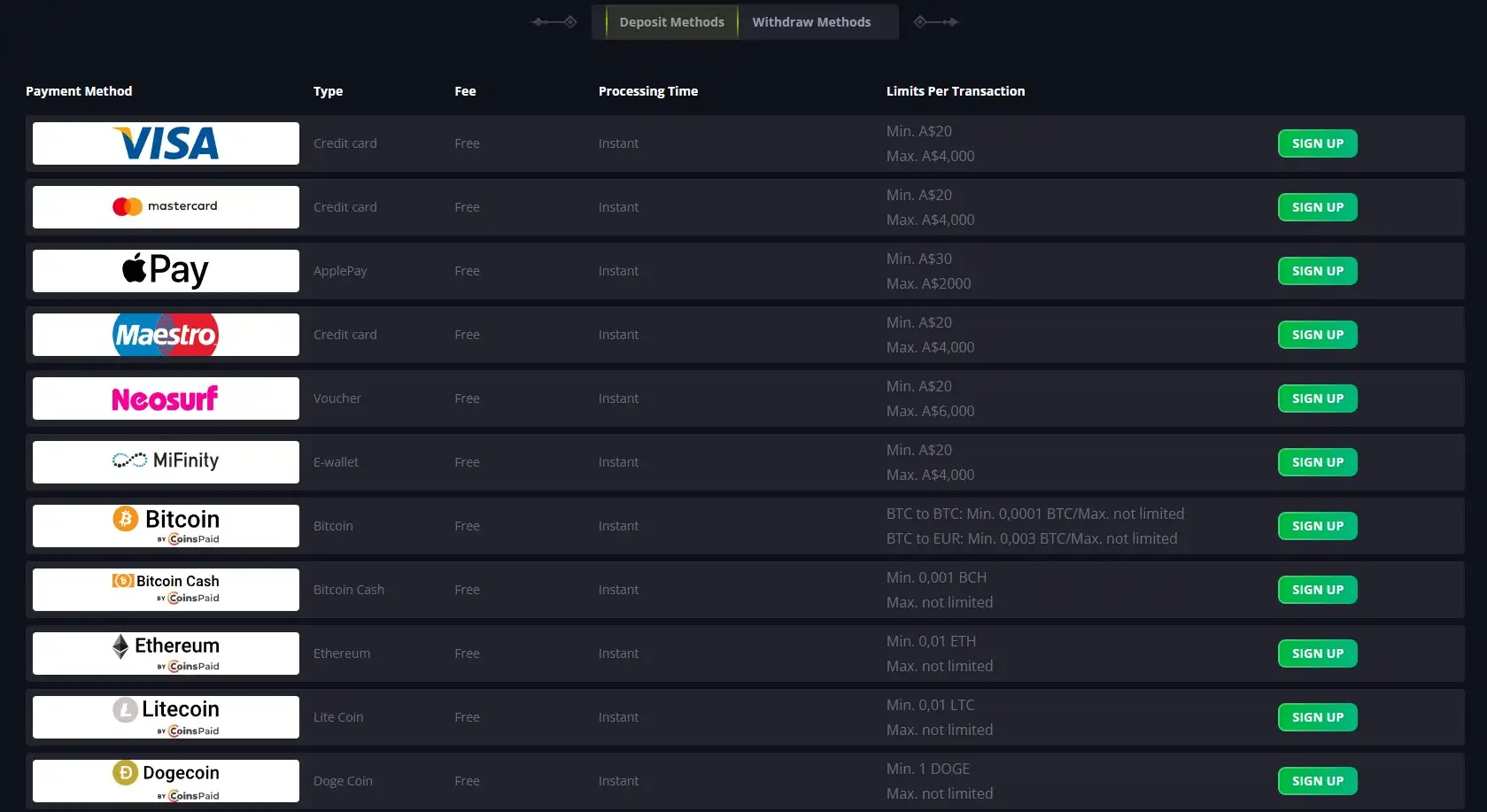
Mobile wallets are similarly common in everyday payments. Google Pay and Apple Pay are accepted almost everywhere in Australia, giving consumers another way to make contactless purchases without presenting a physical card. A wallet can use a card or another linked funding source behind the scenes, so the experience of tapping a phone does not necessarily reveal which payment route is being used.
Australian consumers are also comfortable moving between cards, mobile wallets and services linked to bank accounts, such as PayPal. The choice can depend on what is convenient for a particular purchase and which payment option is available at the point of sale. This flexibility is a feature of consumer payment habits, not a guarantee that every service will offer every method.
For a reader comparing card-based options, the practical distinction is between being accustomed to using a card and having that card accepted for a specific kind of transaction. Contactless acceptance in everyday settings describes a broad retail pattern; it does not establish how an online gambling payment is treated. Nor does familiarity with Mastercard as a card brand establish that a particular online service will process it.
Payment habits therefore provide context, not a shortcut to determining availability. Australians may move easily between a card, a phone wallet and a bank-linked service, but the method used for one purchase cannot be assumed to work for another. The relevant payment route depends on the transaction and the service handling it, rather than on how common contactless card use is in daily life.
Withdrawal Timing Depends on the Method and the Casino
A deposit method does not determine how a later withdrawal is handled. The casino’s rules may treat payments into an account and payments out of it as separate processes, with different available methods, limits and processing times. A Mastercard option at deposit would therefore not establish that Mastercard can be used to receive a withdrawal, or indicate how long that withdrawal might take.

For anyone checking a casino withdrawal by Mastercard, the relevant details are the withdrawal methods currently shown by the operator, any conditions attached to them, and the stated processing stages. A displayed method may be subject to account checks or other terms, so distinguish the operator’s review time from the time required for a payment to reach you. Do not infer a Mastercard timetable from information about another card.
A specialist review has reported that Amex withdrawals can take up to five days to clear. That is a report about Amex, not a general processing standard, and it cannot establish the speed or availability of Mastercard withdrawals. The same type of review notes that not every Australian online casino permits withdrawals to Amex, while withdrawal limits can be set by individual operators and may differ. These details illustrate why a payment method’s withdrawal rules need to be checked on their own; they do not verify a casino with Mastercard withdrawal support.
There is also a legal and practical distinction for people in Australia. The Interactive Gambling Act 2001 prohibits operators from providing real-money online casino services to people located in the country. Australian consumer law does not protect players who use offshore casinos. A payment route or a stated processing time does not change either point.
If you encounter a claim about a Mastercard withdrawal, treat it as a claim about a specific operator and its stated terms, not as evidence of a broader market practice. Deposit support, withdrawal eligibility and settlement time are separate pieces of information. Without a clearly stated withdrawal route and timing for Mastercard, neither should be assumed from the ability to pay by card.
Amex Deposit Process
The player selects American Express as the payment method in the cashier.
The player enters the card details and the deposit amount in Australian dollars.
The player submits the payment for processing.
Follow the Payment Flow in the Cashier Before Committing
A payment method is not confirmed by a logo on a page or a general statement about card deposits. The cashier is the point where the available options for a particular account and transaction are displayed. If Mastercard is not shown as selectable there, a reference to card payments elsewhere does not establish that you can use it.
The described American Express process illustrates what a cashier can reveal: the player selects Amex, enters card details and a deposit amount in Australian dollars, then submits the payment. That example applies to Amex. It does not establish that Mastercard is offered, that its fields or steps are the same, or that a Mastercard payment will be accepted.
Treat each stage as a separate check. First, see whether the cashier presents Mastercard as an option. If it does, read the instructions shown before entering details. The screen may state what information is needed and how the amount is entered. Do not assume an option is available simply because the site mentions Mastercard in general terms; the live cashier is more directly relevant to the transaction you are attempting.
A specialist review has reported that Amex deposits are available at some Australian online casinos, but that time-sensitive statement does not identify Mastercard availability at a particular service. It also cannot tell you what your own cashier will display. To answer which casino accepts Mastercard, you would need current, operator-specific confirmation; an Amex example is not a substitute.
Submitting payment is a distinct action from viewing the method or filling in a form. Before you proceed, make sure the selected method and the displayed transaction details match what you intended. If Mastercard is absent, do not treat another card option as equivalent. If the cashier provides no clear confirmation, do not infer acceptance from a general payment claim. This keeps the decision tied to the actual method and transaction shown, rather than to assumptions carried over from another card.

Treat Payment-Linked Bonus Claims With Caution
A claim that a casino offers a bonus for using Mastercard is not proof that the offer exists, applies to your account or is available to Australian residents. Payment support and an incentive are separate claims: evidence about one does not establish the other. The same distinction applies to phrases such as “Mastercard bonus” or “bonus for card deposits”; wording alone does not confirm an offer’s conditions.
Do not treat a headline, banner or promotional summary as sufficient detail to make a financial decision. An offer may be subject to conditions, and the wording presented to you may not explain whether a particular payment method qualifies. Without clear, applicable terms, you cannot determine what the claim requires or what restrictions apply. Avoid assuming that a bonus will be credited simply because a card is used.
This distinction matters especially in Australia. The Interactive Gambling Act 2001 prohibits operators from providing real-money online casino services to people in Australia, and Australian consumer law does not protect players who use offshore casinos. A promotional claim does not change those legal or consumer-protection risks. Information about common payment habits also says nothing about whether an incentive is lawful, available or suitable.
The practical conclusion is narrow: treat a Mastercard-linked casino bonus as an unconfirmed promotional claim unless its terms can be established for the relevant service and account. Do not rely on the promise of an incentive to justify a deposit or to infer that Mastercard is accepted. A payment method, a bonus claim and the legal status of the service are distinct matters; none can stand in for evidence about the others.
How do you check if casino sites accept Amex deposits?
Check the cashier for American Express as an available deposit method before entering your card details. A general card logo or payment statement does not confirm Amex acceptance.
Can you use an American Express gift card at an online casino?
Yes, at casinos that accept American Express, gift cards can be used for deposits only.
Are casino Amex payments instant?
Yes, Amex deposits are processed instantly. Withdrawals can take up to five days to clear.
How can I know if an online casino will accept American Express?
Check whether American Express appears as an option in the cashier for your deposit. Some casinos accept it, but acceptance at one site does not confirm availability at another.
How long do Amex casino deposits take to process?
Amex deposits are processed instantly.
Published by the Lucky elf Casino team.