No-Minimum Deposit Casinos in Australia: How They Work
 Available in AU
A casino may set no deposit floor, but the payment method can still impose its own rules on whether a small transaction will be processed.

Table of Contents
- How a No-Minimum Deposit Offer Works in Practice
- What Australia’s Offshore Casino Market Means for You
- The Real Cost of Depositing and Cashing Out Small Amounts
- Crypto Deposits: Low Entry Amounts, Real-World Limits
- PayID, PayPal and Game Access: Check the Route Before You Pay
- Crypto Deposits for Pokies: Why the Minimum Is Not the Whole Story
- How Slot Play Affects Bonus Wagering
- A No-Deposit Bonus Is Not the Same as Withdrawable Cash
- Bitcoin Deposits and the Minimum You Can Actually Use
- PayPal Casino Deposits: The Payment-Processor Catch
How a No-Minimum Deposit Offer Works in Practice
A “no minimum deposit” claim describes one part of a payment arrangement: the amount the operator requires you to add to an account. If the operator sets no deposit floor, it does not reject a deposit solely because the amount is below an operator-defined minimum. That does not mean every amount can be sent, accepted or used. The payment method has its own rules, and those can set a practical floor even when the operator does not.
Think of the transaction as two separate checks. First, the operator’s account system determines whether the deposit meets its own conditions. Second, the selected payment route determines whether it will process a transaction of that size. If the operator has no minimum but the payment method does, the smaller payment may fail before the casino account can be credited. The offer’s wording does not override the payment provider’s restrictions.
This distinction matters when comparing an online casino with no minimum deposit against one that states a minimum. The first description may refer only to the operator’s policy. It does not establish that a payment can be made for any amount, or that every payment route shown on the site will accept a small transfer. A stated operator minimum, by contrast, is an additional condition: a deposit must satisfy it as well as the method’s requirements.
If you’re looking for a casino with no minimum deposit, check the payment terms before signing up: the available details here show that some listed operators do have minimums. Use this overview to see which specific deposit and licensing facts are available for each option.
License: Curacao · Min. deposit: A$20 (POLi) Lucky Dreams is listed with a A$20 minimum deposit via POLi and a Curaçao licence. Check whether those terms suit your deposit plans.
License: Curacao OGL/2024/1335/0780 · Min. deposit: EUR 20 Vegaz Casino lists a Curaçao OGL/2024/1335/0780 licence and a EUR 20 minimum deposit. You can use these details to assess its fit for your payment plans.
License: Curacao Golden Pokies is listed with a Curaçao licence. No minimum-deposit details are provided, so check the terms before depositing.
License: Curacao eGaming (Roby Games Ltd) Roby Casino is listed under a Curaçao eGaming licence held by Roby Games Ltd. No minimum-deposit information is provided.
Payout speed: crypto under 1 hour, PayID 1-3 business days · Min. deposit: A$20 (A$30 to qualify for the bonus) Ricky Casino lists a A$20 minimum deposit, rising to A$30 to qualify for the bonus. Payout speed is listed as under an hour for crypto and 1–3 business days for PayID.
License: Curacao eGaming (Hollycorn N.V., since 2017) · Min. deposit: A$20-30 (depends on the offer) Playfina Casino lists a A$20–30 minimum deposit, depending on the offer. It operates under a Curaçao eGaming licence held by Hollycorn N.V., with the stated licensing relationship dating to 2017.
License: Curacao Gaming Control Board OGL/2023/176/0095 (Hollycorn N.V.) LuckyVibe is listed under Curaçao Gaming Control Board licence OGL/2023/176/0095, held by Hollycorn N.V. No minimum-deposit details are provided.
License: Curacao (operating since 2017) · Min. deposit: A$20 Uptown Pokies lists a A$20 minimum deposit and a Curaçao licence. It is stated to have been operating since 2017.
License: Curacao Gaming Control Board JustCasino is listed with a Curaçao Gaming Control Board licence. No minimum-deposit information is provided, so check the terms directly.
License: Curacao Gaming Control Board OGL/2023/174/0082 (Dama N.V.) SpinsUp is listed under Curaçao Gaming Control Board licence OGL/2023/174/0082, held by Dama N.V. No minimum-deposit details are provided.
The amount that can actually be sent
For a usable deposit, the relevant figure is not just the operator’s stated minimum. It is the lowest amount allowed by both the operator and the payment method. If either sets a floor, that floor affects the transaction. If the method’s minimum is higher than the operator’s, the method controls the amount you can send through that route.
A specialist review of Australian gambling-payment options places the commonly encountered effective minimum for a usable deposit in the A$10–A$20 range. Treat that as a reported benchmark, not a fixed rule for every operator or payment method. The amount can differ between routes and can change as payment arrangements change. A no-minimum-deposit online casino claim therefore needs to be checked against the specific method available at the point of payment.
The practical sequence is straightforward. You select a payment route, enter an amount, and the route either permits the transaction or rejects it under its own conditions. If the amount is accepted, the operator then applies its account rules. A description on a landing page cannot by itself confirm that the selected method will accept the amount you entered.
Why the wording can mislead
The phrase “no minimum” can sound as if a deposit of any size is possible. More precisely, it may mean only that the operator has not set a minimum deposit threshold. The payment provider may still require a minimum transaction amount, and the account may have other conditions that affect what happens after payment. Those are different parts of the process; they should not be collapsed into a single claim.

This is also why “no minimum deposit” should not be confused with “no deposit required.” A deposit policy concerns the amount needed when you choose to add funds. A no-deposit promotion is a separate offer with its own eligibility and conditions. The first phrase does not mean that an account receives money automatically, and it does not establish that a promotion is available.
When checking a no-minimum-deposit claim, look for the operator’s deposit policy and the minimum shown for the payment route you intend to use. Confirm that the amount is expressed in Australian dollars if the account is being funded in AUD; a displayed figure in another currency may not correspond to the amount that reaches the account. Also check whether the payment screen accepts the amount before relying on a general statement elsewhere on the site.
The distinction applies whether a page describes online casinos with no minimum deposit, a casino with no minimum deposit, or real-money access with no deposit floor. Those descriptions do not make the payment process identical. One operator may set no floor while a particular method imposes one; another route may have different conditions. The usable amount is determined by the rules that apply to the specific transaction, not by the broadest wording in a headline.
In short, “no minimum” can accurately describe the operator’s policy without describing the whole payment route. Read it as one condition, then check the payment method’s own minimum. That gives you a more reliable answer to whether a small deposit can actually be made than the offer wording alone.
Attention: A “no minimum” claim may refer only to the operator’s policy and does not override the minimum transaction limits set by your chosen payment provider.
What Australia’s Offshore Casino Market Means for You
A casino’s deposit rules and its legal status are separate questions. “No minimum deposit” describes a payment or account condition; it does not establish that the service may lawfully provide real-money casino games to people in Australia. The relevant distinction is between what the law restricts operators from doing and whether an individual player is personally penalised for placing a bet.
The Interactive Gambling Act 2001 (IGA) is the main federal law governing online gambling in Australia. It prohibits operators from providing certain interactive gambling services to Australian residents. Online casino-style games, including pokies and table games, fall within the prohibited-service framework when offered to customers in Australia. In other words, the restriction is directed at the provision of the service, not at setting a deposit threshold for an account.
That does not mean the individual act of betting with an offshore operator is itself criminalised under the IGA. The distinction matters: the provider’s conduct and the player’s position are not the same legal question. It should not, however, be read as approval of an offshore service or as evidence that it is safe, authorised, or available without interruption. Australian residents remain subject to the practical consequences of enforcement, including website blocking.
The Australian Communications and Media Authority (ACMA) enforces the IGA and monitors compliance with federal interactive gambling laws. Where a website provides prohibited services, or advertises them in Australia, ACMA can ask Australian internet service providers to block access to it. A blocked site may stop loading through a particular internet connection even if its operator still maintains the site elsewhere. A new address or a functioning payment page does not, by itself, change the legal status of the service.

The scale of enforcement is also relevant. ACMA reports that it has blocked more than 1,455 illegal gambling and affiliate websites since enforcement actions began in November 2019. Published figures about services leaving the Australian market since 2017 do not agree: one account puts the number above 210, while another reports more than 190. These figures describe enforcement outcomes across a changing market; they do not establish that a particular site is currently accessible or compliant.
What an offshore licence does—and does not—show
Many sites marketed with an Australian identity operate under a licence issued outside Australia. Commonly cited licensing jurisdictions include Curaçao, Malta and the Isle of Man. Such a licence identifies the regulatory framework the operator claims to follow in that jurisdiction. It is not an Australian casino licence, and it does not override the IGA’s restrictions on providing prohibited gambling services to people in Australia.
That is why licence verification matters before you assess any operator. The stated licence should be traceable to the named legal entity, and the details should be checked with the relevant licensing authority rather than accepted from a logo or a line of marketing copy. A mismatch between the site name and the licensed entity, or licence details that cannot be confirmed, leaves you unable to establish who is responsible for the service or which regulator, if any, supervises that entity.
Legal Risk
Under the Interactive Gambling Act 2001, providing real-money online casino games to people in Australia is prohibited, and the ACMA may block access to such services.
Verification has limits. Confirming a foreign licence can help establish what the operator claims about its oversight; it does not make the service lawful to provide in Australia. Nor does it guarantee that a website will remain reachable, that a dispute will be resolved in your favour, or that an Australian authority supervises the operator. These are separate questions, and a licence badge cannot answer all of them.
For someone comparing no-minimum-deposit casino claims, this legal context should come before the advertised entry condition. A low or absent deposit floor does not change the provider’s obligations under Australian law. Payment availability, a working website, or an Australian-themed name are not evidence of local authorisation either. The useful distinction is between a payment feature and the legal permission to supply the underlying service.
In New South Wales, as elsewhere in Australia, the federal framework remains relevant to online casino services. A state reference in a site’s branding does not create a different federal status for its offer. The same caution applies to claims that an offshore service is “licensed”: identify the issuing jurisdiction and the legal entity, then treat that information as a description of foreign oversight—not as proof that the service is authorised for Australian residents.

The Real Cost of Depositing and Cashing Out Small Amounts
A small balance has to pass through two separate processes: money must reach the account, and any remaining funds must be eligible to leave it. The amount shown as a deposit minimum does not tell you what either step will cost or how long it will take. For a low-value transaction, a fee or a cash-out threshold can matter more than the amount you intended to play with.
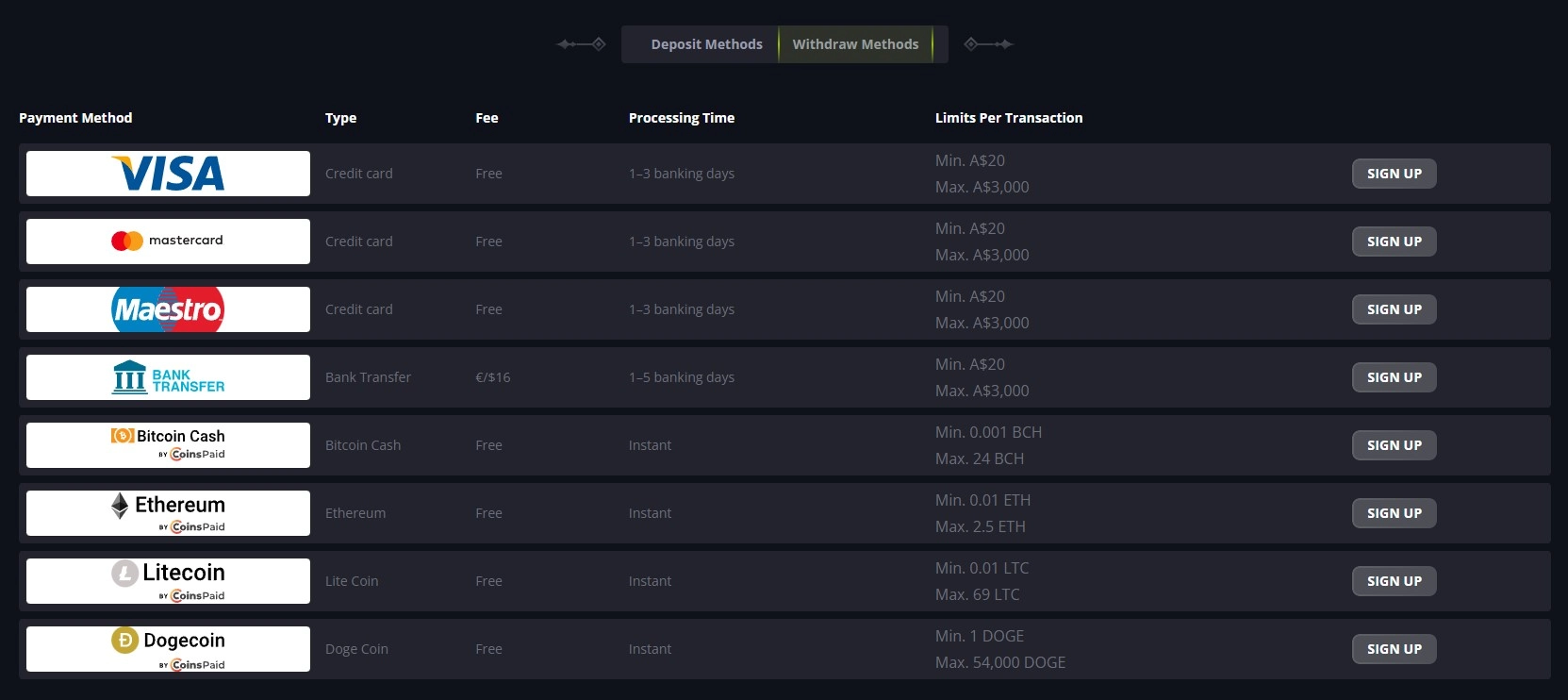
Start with the route used to fund the account. A bank transfer can be a poor fit for a small deposit because processing may take several business days. The sending bank may also charge a fee. If a fee applies, it reduces the amount that arrives relative to the amount sent; if the transfer is delayed, the balance is not available to use while it is being processed. Check the sending bank’s terms and the casino’s payment instructions before initiating the transfer, rather than assuming that the displayed deposit amount is the full cost.
The same distinction applies when money leaves the account. A balance can be visible but still below the casino’s minimum cash-out amount. A specialist casino review reports minimum cash-out thresholds in the range of A$20 to A$50. Treat that as a reported range, not a rule that applies to every operator: the threshold is set by the relevant terms and may differ between payment routes. Check the amount for the method you intend to use before you deposit.
This can change the practical value of a small balance. If your available balance is below the applicable threshold, you may not be able to request a cash out yet. You could leave the money in the account, or continue playing, but further play puts the balance at risk. A low deposit therefore does not automatically mean that you can later retrieve any unused amount. The relevant comparison is between your withdrawable balance and the cash-out threshold, not simply between your deposit and the operator’s stated deposit policy.
Fees can also affect the amount that reaches you. A sending-bank fee is one known possibility for a bank transfer; other costs depend on the method and its terms. Do not assume that the amount credited to your casino account and the amount ultimately received will be identical. Before paying, identify whether a fee may apply at the sending stage and whether the receiving method has its own conditions. If the terms do not make the cost clear, the amount is not predictable enough to treat as a fixed small expense.
Small Deposit Check
- Identify the amount that will actually be sent
- Check for any fees charged by the sending bank
- Verify the minimum cash-out amount for the intended payout method
- Compare the cash-out threshold with your realistically available balance
Keep the deposit and cash-out route in view together. Check that the method you use to deposit can also be used to cash out, and follow the operator’s stated process for returning funds through the same method. For a cryptocurrency payment, the payout should return in the same coin. A method that accepts a small incoming payment may still have conditions that make a small outgoing payment awkward, so confirmation of deposit access alone is not enough.
A useful pre-deposit check is to write down three things: the amount that will actually be sent, any fee charged by the sending bank, and the minimum cash-out amount for the intended payout method. Then compare the cash-out threshold with the balance you could realistically have available. This does not predict whether play will produce winnings; it shows whether an unused or remaining balance could be moved out without adding more funds or continuing to play.
For a small real-money balance, the key cost is not only what enters the account. Processing time can keep funds unavailable, a fee can reduce what arrives, and a cash-out threshold can prevent a request until the balance is high enough. Check each stage separately before making a payment.
Crypto Deposits: Low Entry Amounts, Real-World Limits
A cryptocurrency deposit can have a very low stated minimum because the casino sets the amount it will accept, while the payment network handles the transfer separately. A specialist review reports that some offshore operators have accepted cryptocurrency deposits as low as A$5. A separate specialist review describes casino-set minimums as sometimes reaching the equivalent of A$1. These are reported examples, not a dependable promise that a particular payment route will accept an amount that small.

The distinction matters because a casino’s deposit threshold answers only one question: how little it will credit if a transfer arrives and meets its rules. It does not establish what it costs you to send that transfer, how much will be available for play, or whether that balance is enough to place a bet.
The amount sent is not the whole calculation
A crypto transfer can involve a network transaction cost. That cost is separate from the casino’s minimum and may make a small transfer inefficient: the smaller the deposit, the more significant the cost can be relative to the amount you intend to use. The exact effect depends on the network and the route used. Check the quoted cost before confirming a transfer, rather than treating the casino’s advertised floor as the amount you will have available.
The route also has to match the casino’s payment instructions. A deposit sent using an unsupported network or to the wrong address may not be credited as intended. Before sending, compare the selected currency and network with the instructions shown in the cashier, and check whether the casino requires any additional information to identify the payment. A low minimum does not remove these processing conditions.
A crypto transfer involves a network transaction cost separate from the casino’s minimum, which can make very small deposits inefficient relative to the amount intended for play.
A credited balance still has to support a bet
Once the deposit reaches the account, the game’s minimum bet becomes the next constraint. If the balance is only just above the deposit floor, a single permitted bet may use a substantial part of it. If the balance is below the minimum stake for the game you want to play, the deposit can be technically successful but practically unusable for that game.
This is why “no minimum” can describe a narrow operator policy rather than a useful entry point. The casino may impose no deposit floor, or may set one at a nominal level, while the network cost and game rules determine whether the resulting balance can be used sensibly. Consider the entire sequence: the amount you send, the transfer cost, the amount credited, and the minimum stake. Do not infer the last three from the first.
A practical check is to review the cashier’s current instructions and the game’s displayed betting range before transferring. If the smallest permitted stake would consume most of the available balance, a very low deposit is unlikely to provide much room to play. If the network cost is substantial relative to the intended deposit, the amount may be inefficient even when the casino accepts it.

Crypto therefore lowers the possible entry amount in some cases, but it does not erase the costs and limits that apply after you choose to pay. The useful minimum is not simply the smallest figure shown beside a deposit option. It is the amount that can arrive, remain meaningful after transaction costs, and support the minimum bet you intend to place.
PayID, PayPal and Game Access: Check the Route Before You Pay
A payment button and access to games answer different questions. PayID describes a way to transfer money; it does not establish that a service is lawful to provide in Australia, that an account can access a particular game, or that a game can be played without depositing. A “no minimum deposit” label likewise cannot be taken to mean that real-money games are available without payment.
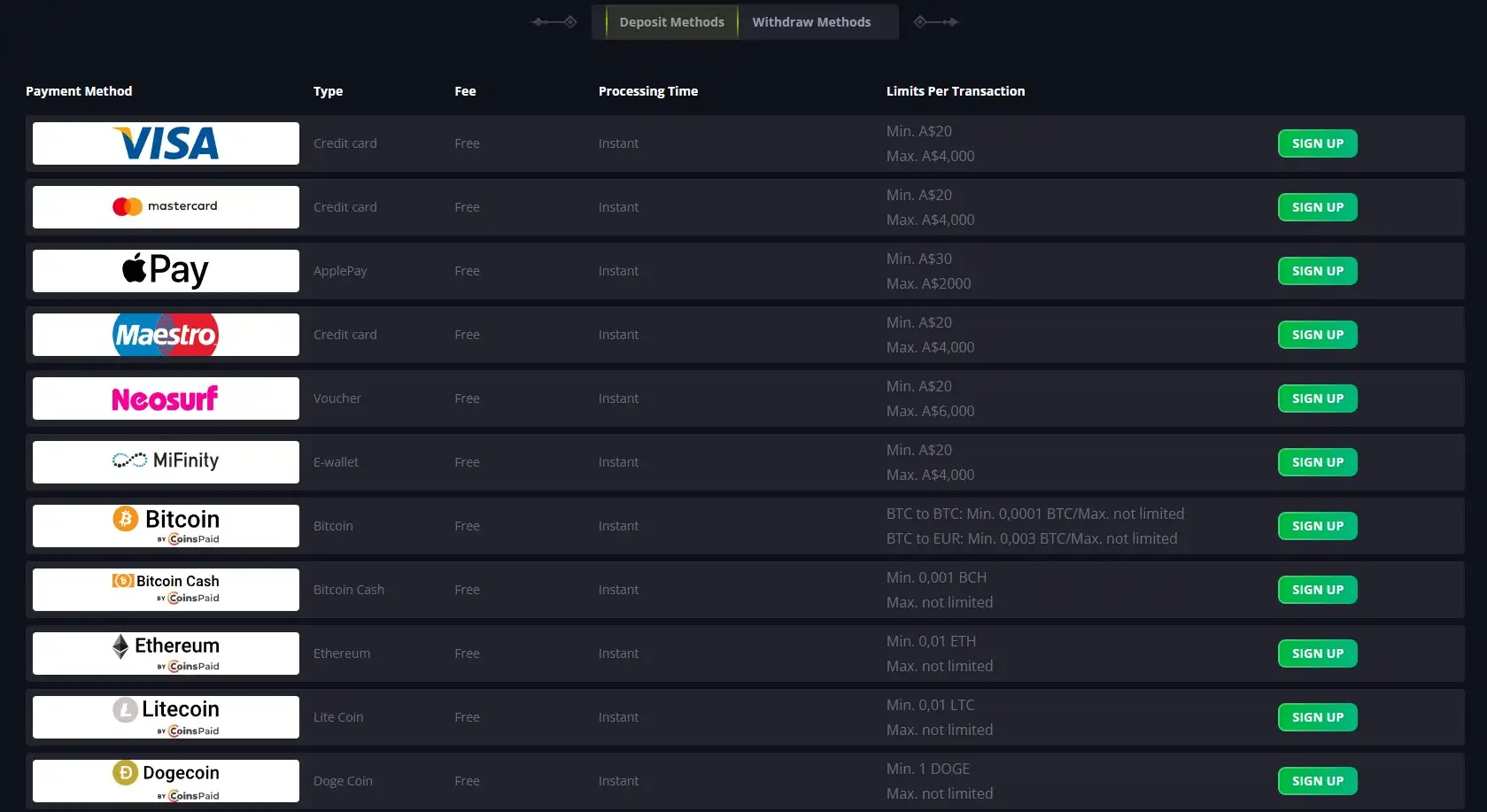
A specialist review reports a typical PayID or instant bank-transfer deposit minimum of AU$10–AU$20. Treat that as a reported range, not a fixed rule for every service or a current guarantee. The amount a provider accepts can depend on its own payment settings and the transfer route. Check the transaction screen and the applicable terms before authorising a payment; a low or absent operator-set floor does not override a minimum imposed by the payment method.

For cashing out, a specialist review describes PayID as often same-day, while noting that timing depends on account verification. That is a reported processing pattern, not a promise that funds will arrive on a particular day. Verification, the operator’s handling of a request and the receiving bank’s processing can affect when money becomes available. Confirm the relevant conditions directly rather than treating a payment-method label as a payout guarantee.
PayPal requires a separate check. The presence of a PayPal logo, or a general claim that an operator has no minimum deposit, does not confirm that PayPal will process a particular amount or that the route is available to Australian users. Do not infer a PayPal minimum, fee, deposit time or cash-out time from information about PayID. Those details need to be stated for the specific transaction and account.
POLi is not a current Australian payment option: it shut down in Australia on 30 September 2023. If a page still presents POLi as a live route, its payment information may be outdated. That fact does not make a different transfer method suitable or establish that a service is permitted to operate.
- Check the transaction screen for the specific payment route
- Confirm account verification requirements for payouts
- Assess game access independently of payment availability
- Assume a PayPal logo guarantees a specific minimum or fee
- Rely on outdated information regarding POLi
- Treat a payment claim as evidence of legal authorization
Game access must be assessed independently of payment access. A site might display a payment method while access to games is restricted, and a payment method’s availability does not make prohibited services lawful. Under the Interactive Gambling Act 2001, operators cannot provide real-money online casino games to people physically located in Australia. So a payment claim, a deposit threshold and a game-access claim should not be treated as interchangeable evidence.
Crypto Deposits for Pokies: Why the Minimum Is Not the Whole Story
A crypto deposit minimum describes the smallest amount an account may accept. It does not tell you whether that amount can support a useful session on pokies. The difference comes from the balance available after the transfer and the amount needed for each eligible game action.
A specialist casino review reports that some casinos set a cryptocurrency deposit floor as low as the equivalent of A$1. That is a reported offer, not a dependable market-wide figure. More importantly, a low floor is only an entry condition: it says nothing by itself about the minimum stake on a particular game or how many spins the credited balance can fund.
Think of the balance as a finite number of stake-sized portions. If a game requires a stake larger than the balance, you cannot use that game with the funds available. If the stake is smaller, the balance may permit play, but the number of spins depends on the chosen stake. A small balance can therefore be technically accepted yet leave little room to vary stakes or continue after losses.

Crypto also introduces a distinction between the amount sent and the amount shown in the casino account. The deposit is denominated in a digital asset, while the stated minimum and game stakes may be displayed in Australian dollars or another currency. The relevant comparison is the credited value after conversion, not just the number of coins in the sending wallet. The exchange rate can change, so a transfer amount that appears to meet a displayed floor may not match the value credited when processed.
Before treating a low minimum as meaningful for pokies, check the deposit instructions and the game’s own stake controls. Confirm the minimum accepted by the casino for that cryptocurrency, how the credited balance is valued, and the smallest stake permitted in the game you intend to use. Then compare the playable balance with that stake. If the game’s minimum is higher than the balance, the low deposit threshold has no practical value for that game.
Do not infer that every pokies title accepts the same stake. The minimum can differ between games, and the amount you choose to stake determines how quickly a small balance is used. A displayed deposit floor is therefore not a promise of a particular number of spins, nor evidence that a balance will be sufficient for a game.
The useful question is not simply whether a crypto account accepts a very small deposit. It is whether the amount credited can be used at the minimum stake of the specific pokies game, with enough balance left for the play you consider practical. That calculation connects the payment threshold to actual game use without treating the two as the same thing.
Evaluating Crypto Play
Confirm the minimum cryptocurrency amount the casino is willing to credit.
Subtract the network transaction cost from the amount sent to find the actual credited value.
Check the minimum bet of the specific pokies game to ensure the balance can support a practical number of spins.
How Slot Play Affects Bonus Wagering
A wagering requirement is calculated from eligible bets, but a bet does not necessarily count in full. The game’s contribution rate determines how much of each stake is credited toward completing the requirement. That rate can therefore change the total amount of play needed, even when the bonus terms set the same wagering target.
Pokies typically contribute 100% of eligible stakes. In the calculation, a stake at that contribution rate counts in full. Blackjack and roulette may contribute only 10% or 20%, so only that share of an eligible stake is credited. The remainder does not advance the wagering requirement.
You can model the calculation as:
credited wagering = eligible stake × contribution rate
For a given target, the required eligible stake is the target divided by the contribution rate. A lower rate means more total stakes are needed to reach the same target. This is why comparing the wagering multiplier alone can give an incomplete picture: the multiplier sets the target, while game weighting determines how quickly eligible play moves you towards it.

The wording of the terms matters. Check whether the contribution applies to the stake or to another defined amount, which games qualify, and whether any game-specific restrictions apply. Do not assume that every game in a category receives the same weighting. If a game contributes less than the full stake, playing it may extend the amount of wagering needed; if it is excluded, its play may not count at all.
A useful comparison is to calculate credited wagering for each game category before accepting a promotion. Apply the listed contribution rate to the eligible stake, then compare the result with the target in the bonus terms. This separates the advertised wagering requirement from the actual amount of qualifying play it can demand.
These calculations describe how bonus terms work; they are not a recommendation to use a gambling service. For Australian readers, real-money online casino games are prohibited services under the Interactive Gambling Act 2001 when provided to people in Australia.
A No-Deposit Bonus Is Not the Same as Withdrawable Cash
A bonus credited without a qualifying deposit is still promotional credit, not cash you can automatically take out. Its value depends on the conditions attached to it: the wagering requirement, which games count toward that requirement, and any cash-out cap or maximum stake stated in the terms. Until the conditions are met, a balance shown in your account may not be eligible for cash out.
How to read promotion terms
Read the terms in this sequence: first, confirm the minimum deposit; second, check the wagering multiplier; third, compare game weighting (e.g., pokies vs. table games); and finally, check for maximum stakes or cash-out caps.
A specialist review reports wagering requirements of 35x to 50x the bonus amount for some low-deposit bonuses. Treat that as a report about particular offers, not a standard that applies everywhere. The multiplier tells you how much qualifying play is required, but it does not by itself show how likely the bonus is to become withdrawable. Game weighting can mean that different types of play contribute unequally, so check which activities count and at what rate.
Before accepting a promotion, read the terms in this order:
- Minimum deposit: Confirm whether the offer requires a deposit to activate it. “No deposit” should not be assumed to mean that every condition is absent.
- Wagering multiplier: Check what amount the multiplier applies to—the bonus, winnings, or another defined balance.
- Game weighting: Compare the contribution assigned to pokies with the contribution assigned to table games.
- Other restrictions: Check the maximum stake while wagering and any cap on the amount that can be cashed out.
These conditions work together. A low advertised bonus can still require substantial qualifying play if its multiplier is high, while restricted game weighting can make progress slower than the headline figure suggests. If the terms are unclear about the balance used in the calculation or what happens when wagering is incomplete, the bonus’s cash value cannot be assessed reliably. Read the full conditions before accepting; do not treat the displayed bonus balance as available funds.
Bitcoin Deposits and the Minimum You Can Actually Use
A Bitcoin deposit minimum can describe only the amount an operator is willing to credit. It does not tell you whether that amount will leave a usable balance after the transfer or cover a game’s minimum bet.
One specialist review reports that some casinos set a cryptocurrency deposit threshold as low as the equivalent of A$1. Treat that as a report about particular offers, not a dependable market-wide figure: payment terms can differ between operators and change over time. Bitcoin also does not make an operator’s stated threshold the only cost to consider. A transaction fee may apply, and the amount credited can therefore be less useful than the headline minimum suggests.
The next constraint is the game’s own minimum stake. If the available balance is below that stake, you cannot place a bet; if it covers only a small number of bets, the nominal deposit may still have little practical value. The relevant comparison is between the amount credited, any transaction cost and the minimum bet—not just the deposit figure displayed on a payment page.
Before relying on a small Bitcoin amount, check the deposit terms and the game rules separately. Confirm that the payment route accepts the amount you intend to send, how the operator calculates the credited balance, and whether the games you are considering accept stakes within that balance. A low stated minimum does not establish that every Bitcoin transfer is economical or that every game can be played with the resulting funds.

Bitcoin is a payment method, not an exception to Australian law. The Interactive Gambling Act 2001 prohibits operators from providing real-money online casino games to people in Australia. A low deposit threshold does not change that restriction.
PayPal Casino Deposits: The Payment-Processor Catch
A casino’s “no minimum deposit” wording describes the operator’s own rule. It does not establish that PayPal will accept a transaction of any size, or that PayPal is available for that payment route. The operator and the payment provider control separate parts of the process: the operator may set no deposit floor, while a provider can apply its own transaction conditions.
That distinction matters when you are checking whether a very small payment can be made. Seeing PayPal listed on a payment page does not, by itself, confirm that a particular amount will go through. Equally, an operator’s stated minimum cannot tell you what the provider will accept. Do not treat the phrase “no minimum deposit” as confirmation of a PayPal-specific minimum, fee, or availability.
Before entering payment details, check the current terms shown by both parties. Look for any minimum or other transaction condition stated by the operator, then confirm what the payment provider displays for the transaction. If the amount is rejected or the option is unavailable, the operator’s no-floor policy does not override that result. A failed attempt is not proof that the casino has changed its deposit policy; it may reflect a separate restriction on the payment route.
Also distinguish a deposit method from an account balance. A provider’s willingness to process a payment does not establish what the operator will credit, and an operator’s deposit policy does not guarantee that funds will be accepted through every listed method. The practical answer depends on the exact route presented at the time, not on the general label attached to the operator.
For a low-value payment, verify the complete transaction before confirming it: the amount being charged, any conditions displayed, and the amount the operator says will be credited. If those details are unclear, do not assume that a PayPal payment will work simply because the deposit page describes the account as having no minimum.
What is the actual minimum deposit at a no-minimum-deposit casino in Australia?
A usable deposit commonly has an effective minimum of A$10–A$20, even if the casino itself sets no minimum. Some offshore casinos accept cryptocurrency deposits as low as A$5, but payment-method rules and transaction costs can affect what is practical.
Are no-minimum-deposit casinos legal in Australia?
No, a no-minimum-deposit claim does not make an offshore casino authorised to serve Australians. The Interactive Gambling Act 2001 prohibits operators from providing certain online casino services to Australian residents, although it does not criminalise an individual’s act of betting with an offshore operator.
What payment method is best for small deposits in Australia?
Cryptocurrency can allow deposits as low as A$5 at some offshore casinos, though transaction costs and game minimum bets may make very small deposits impractical. Neosurf vouchers typically start at A$10, while PayID or instant bank transfers commonly require A$10–A$20.
What is the minimum deposit and what are the wagering requirements?
A usable deposit commonly starts at A$10–A$20, depending on the payment method. Low-deposit bonuses may require wagering 35x–50x the bonus amount; slots usually count fully, while blackjack and roulette may count only 10% or 20%.
Do low-deposit bonuses have wagering requirements?
Yes, low-deposit bonuses may carry wagering requirements of 35x–50x the bonus amount. Check the game weighting, maximum bet during wagering, and any maximum cashout cap before accepting.
Can I withdraw winnings from a low deposit?
Yes, but a minimum withdrawal of A$20–A$50 is common, and bonus wagering conditions may also need to be met. Check the promotion’s rules, including any maximum stake and cashout cap.
Written by the editors at Lucky elf Casino.