
Solana Casino Comparison Australia: Funding & Rules
 Available in AU
A practical guide to funding offshore sites, assessing casino terms and understanding the transaction and tax issues raised by SOL play.

Table of Contents
- How to Fund an Offshore Solana Casino from Australia
- The Legal Position for Australian Players
- How to Compare Solana Casino Sites Without Relying on Rankings
- Solana Slots: Bonus Wagering and Cash-Out Conditions
- SOL, USDC and NFT Claims: What the Available Facts Support
- Crypto Gambling and Australian Tax Treatment
- What Solana Changes About Casino Transactions
- Casino Games, Bonus Playthrough and the Cost of Wagering
- Solana Withdrawals: Processing Time, Fees and Checks
- Before You Send SOL to a Casino Wallet
How to Fund an Offshore Solana Casino from Australia
Funding an offshore casino that accepts SOL involves two separate transfers: first, moving AUD to a service that can convert it into cryptocurrency; then sending SOL from a wallet you control to the casino’s deposit address. The casino generally does not receive AUD in this route. Instead, the Australian-dollar payment ends at the exchange or on-ramp, and the later blockchain transfer carries SOL to the platform.
Most Solana casinos do not take AUD directly by bank transfer or credit card. That means you cannot assume that a casino account can be topped up like a domestic bank or card account. The practical route is to buy SOL through an Australian exchange that supports AUD deposits, then transfer the SOL to the casino wallet. Swyftx, CoinSpot and Coinbase AU support AUD deposits by PayID or bank transfer. Availability of a particular payment method can depend on the service and account; check its instructions before sending money.
From AUD to SOL
Start with the exchange or on-ramp account, not the casino deposit screen. The service converting between AUD and SOL is where the first payment takes place. PayID or a bank transfer moves AUD to that service; the service then converts the funds into SOL. Review the quoted conversion and any charges displayed before confirming, since the amount of SOL you receive depends on the transaction presented to you.
If you’re looking for a Solana casino in Australia, use this list as a starting point and check directly whether each site supports Solana, as the details here don’t confirm that. The listed licensing and payment information can help you assess what is known before you decide.
License: Curacao · Min. deposit: A$20 (POLi) Lucky Dreams lists a Curacao license and an A$20 minimum deposit via POLi. That gives you a specific deposit option and amount to check against your needs.
License: Curacao OGL/2024/1335/0780 · Min. deposit: EUR 20 Vegaz Casino lists Curacao license OGL/2024/1335/0780 and a €20 minimum deposit. You can use those details when checking its terms and payment options.
License: Curacao Golden Pokies is listed with a Curacao license. That is the available licensing detail to consider; no payment or other operator specifics are provided here.
License: Curacao eGaming (Roby Games Ltd) Roby Casino is listed with Curacao eGaming, with Roby Games Ltd named. Those are the available details for you to review.
Payout speed: crypto under 1 hour, PayID 1-3 business days · Min. deposit: A$20 (A$30 to qualify for the bonus) Ricky Casino lists crypto payouts in under an hour and PayID payouts in 1–3 business days. Its minimum deposit is A$20, or A$30 to qualify for the bonus.
License: Curacao eGaming (Hollycorn N.V., since 2017) · Min. deposit: A$20-30 (depends on the offer) Playfina Casino lists Curacao eGaming, with Hollycorn N.V. and a start date of 2017. Its minimum deposit is A$20–30, depending on the offer.
License: Curacao Gaming Control Board OGL/2023/176/0095 (Hollycorn N.V.) LuckyVibe lists a Curacao Gaming Control Board license, OGL/2023/176/0095, under Hollycorn N.V. This licensing information is the main detail available for you to assess.
License: Curacao (operating since 2017) · Min. deposit: A$20 Uptown Pokies is listed with a Curacao license, has been operating since 2017, and has an A$20 minimum deposit. These details give you a brief snapshot of its background and entry amount.
License: Curacao Gaming Control Board JustCasino is listed with a Curacao Gaming Control Board license. No deposit, payout, or other specifics are provided here.
License: Curacao Gaming Control Board OGL/2023/174/0082 (Dama N.V.) SpinsUp lists Curacao Gaming Control Board license OGL/2023/174/0082, under Dama N.V. That is the available operator-specific information for you to review.
KYC and anti-money-laundering checks apply to on-ramp and off-ramp services that convert SOL to AUD. These checks belong to the conversion service, rather than to the Solana network itself. You may need to complete the service’s account checks before it permits a purchase or transfer. The precise checks and account requirements are set by that service, so read its current instructions rather than assuming that creating an account is enough.
Once the SOL appears in an account or wallet from which you can send it, the next step is a transfer to the casino’s deposit address. A casino may show a deposit address in its cashier or wallet area. Treat the address and the selected network as a matched pair: the casino must support the asset and network you are sending on. Do not rely on an address copied from an old transaction or another platform. Check the destination carefully before approving the transfer. SOL transfers are irreversible; sending to the wrong address can mean permanent loss.
From your wallet to the casino
The exchange may let you withdraw SOL directly to an external address, or you may first move it to a self-custody wallet and send it from there. In either case, the destination is the casino’s stated Solana deposit address. Follow the casino’s deposit instructions exactly, including any account-specific details it displays. A transfer to an address that is not the one assigned for your deposit may not be credited to your account.

After entering the destination, check that the asset is SOL and that the network is Solana before confirming. Compare the first and last characters of the address with the casino’s displayed address, and verify the full value if your wallet allows it. A successful confirmation from the sending wallet shows that a transaction was submitted or completed on the network; it does not, by itself, prove that the casino has credited your account. If the balance does not appear, use the transaction details and the casino’s stated support process rather than sending another payment automatically.
This deposit route also separates payment questions from account questions. The exchange handles the AUD-to-SOL conversion and its associated KYC/AML requirements. The casino controls the account balance and may impose its own account rules. A completed conversion does not establish that the casino will accept a deposit, and a blockchain transfer cannot reverse a platform decision or recover funds held by an offshore operator.
Limits of the route
The key practical limit is that direct AUD funding is not broadly available at Solana casinos. A bank transfer or PayID payment made to an exchange is not a bank deposit to the casino: it is the first stage of a conversion route. Credit cards should not be treated as a way to fund online gambling. If you are considering any offshore service, understand that the Interactive Gambling Act 2001 prohibits operators from providing online casino games to people in Australia. The fact that the route uses cryptocurrency does not change that restriction or make using the service legally safe.
Legal Restriction
Under the Interactive Gambling Act 2001, it is prohibited for offshore operators to provide online casino games to people in Australia.
Offshore platforms also provide limited consumer protection. Australian authorities cannot provide recourse if an operator withholds funds or closes the platform. Using a VPN may lead to an account being seized and funds being lost. Before sending any SOL, confirm that you understand the destination, the account rules and the consequences of an irreversible transfer.
The Legal Position for Australian Players
Australians may buy, hold and transfer SOL. The legal issue arises when that cryptocurrency is used to gamble with an offshore operator. Under the Interactive Gambling Act 2001, operators outside Australia are barred from providing online casino services to people in Australia. The restriction covers casino-style gambling, rather than the underlying use of a digital asset.
The Act places its prohibition on the operator, not on an individual Australian player. That distinction means a player is not directly penalised under the Act simply for using an offshore casino. It does not, however, make the service lawful or turn it into a legally protected way to gamble. The operator’s conduct remains prohibited, and the player should not treat the absence of direct player penalties as approval or assurance of safety.
This distinction is especially important when a site accepts SOL. The payment method does not change the legal character of the service: if an offshore platform provides online casino gambling to a person located in Australia, using a cryptocurrency rather than Australian dollars does not remove the operator-side restriction. Buying or transferring SOL is one matter; using it to participate in a service that Australian law prohibits operators from supplying is another.


The Australian Communications and Media Authority (ACMA) is responsible for enforcing the Act. One way it does so is by directing internet service providers to block access to unlicensed offshore gambling websites. A blocked site may become difficult to reach from Australia, but access restrictions do not settle a dispute between a player and the operator. Nor does a website being reachable establish that its service is lawful for Australian residents.
A legal grey zone for the player should not be confused with a safe or regulated option. The fact that individual players are not directly penalised does not prevent practical losses, account restrictions or disputes. An offshore operator may freeze an account or refuse to release winnings, and Australian law does not give players protection against that outcome. Australian authorities cannot provide a route to recover funds withheld by such a platform.
That leaves a gap between the operator’s legal obligation and the player’s practical remedies. The Act can be enforced against operators, including through website blocking, but that does not mean ACMA can resolve an individual payment dispute or compel an offshore casino to pay a balance. If the platform closes or declines to honour a withdrawal, a player cannot rely on Australian authorities to recover the money. The fact that the operator is based overseas can also make pursuing a dispute more difficult in practice.
Recourse Limitation
Australian authorities cannot provide a route to recover funds withheld by an offshore platform or resolve individual payment disputes.
Before treating an offshore Solana casino as an ordinary online service, separate three questions: whether you may own and transfer SOL, whether the operator may offer casino gambling to people in Australia, and what recourse you would have if the operator withheld funds. The first is permitted; the second is prohibited under the Act; and the third offers no protection under Australian law for players using these offshore platforms.
So the legal position is not that a player is directly punished for using an offshore casino. It is that the operator is prohibited from supplying the service, while the player may still face the financial consequences without an Australian remedy. No direct penalty for the player is not the same as legal safety.
How to Compare Solana Casino Sites Without Relying on Rankings
A ranking can hide the criteria that produced it. A useful comparison instead shows the evidence behind each assessment, separates facts from promotional claims and makes it possible to see what remains uncertain. For Australian readers, that distinction matters: the Interactive Gambling Act 2001 prohibits offshore operators from providing online casino games to people in Australia. A comparison is not confirmation that any offshore site is lawful or safe to use.
Check what “licensed” actually means
Look for the regulator, the legal entity named on the licence, the licence number and a way to verify the record with the regulator. Then check whether the licence covers the operator and the relevant gambling services, rather than relying on a badge or a claim in marketing copy. If the comparison does not identify the issuing authority and the entity it licenses, it has not established meaningful oversight.


Australia has no specific licensing framework for crypto-gambling operators as of mid-2026, according to a specialist review. An offshore licence should therefore not be presented as Australian approval. Nor does a licence by itself establish that Australian residents are protected: offshore casinos are prohibited from offering online casino services to people in Australia under the Interactive Gambling Act. ACMA enforces that law, and Australian authorities cannot provide recourse if an offshore operator withholds funds.
Treat RTP as a disclosed figure, not a promise
RTP, or return to player, is a theoretical measure of the share of stakes a game is designed to return over extended play. It does not predict the result of an individual session or guarantee that you will recover a particular amount. A comparison should say where its RTP figure comes from and whether it applies to the specific game version available on the site. If the figure appears only in promotional material, or the comparison gives no method for checking it, treat it as an unverified claim.
A site-wide RTP claim is not a substitute for game-level information. The figure can vary between games, so the relevant question is whether the comparison identifies the game and the applicable return setting. A clear comparison should also distinguish a published theoretical rate from any claim about actual player outcomes.
Attention: A site-wide RTP claim is not a substitute for game-level information, as the return rate can vary between different games.
Ask what “provably fair” lets you verify
A provably fair tool should explain what information it exposes and how a player can use that information to check a game result. The comparison should describe the verification process in plain language and distinguish a verifiable result from a broad assurance that a casino is fair. If it only repeats the operator’s label without explaining what can be checked, it has not demonstrated how the tool works.
This check is separate from licensing and RTP. A result-verification feature does not establish that an operator will honour a withdrawal, and a published RTP does not show that a particular result was generated correctly. Each claim needs its own evidence.
Read the withdrawal KYC policy before judging access
The comparison should state when KYC checks may occur, what identity documents can be requested and whether verification may be required before a withdrawal is approved. Check whether the policy applies to all withdrawals or identifies circumstances that can prompt additional review. Larger withdrawals and bonus cashouts may trigger ID checks, so a page that describes withdrawals as unconditional without setting out the verification policy leaves out a material restriction.
Also note whether the policy is easy to locate and consistent with the operator’s cash-out terms. Do not assume that a lack of an upfront document request means no check will happen later. A comparison should report what the written policy says, not infer an exemption from the absence of a check at registration.

Measure a bonus by its usable value
A headline bonus amount does not show how much value you can retain. To assess the offer, a comparison needs to disclose the playthrough requirement, which funds it applies to, game contribution rates, any time limit and any maximum cashout cap. These terms determine how much qualifying wagering is required and whether a balance can be withdrawn after conditions are met.
Effective bonus value depends on the interaction between those terms, not on the advertised amount alone. A bonus may contribute less than its face value if only some games count fully, if the deadline is restrictive, or if a cashout cap limits what can be kept. A comparison should explain its calculation and identify the assumptions used. If it leaves out a material term, its value estimate is incomplete. The precise effect of free-spin winnings and bonus-fund restrictions depends on the offer’s own wording.
Check how the comparison is funded
If a page uses partner links, it should identify them as affiliate or promotional links and disclose that the publisher may receive compensation. That relationship does not prove that an assessment is wrong, but it gives you relevant context for judging its independence. Look for the same level of detail for every site considered: licensing evidence, RTP basis, provably fair checks, withdrawal KYC policy and bonus conditions. If some entries receive less scrutiny, the comparison is not applying a consistent method.
A dependable evaluation is one you can audit. It shows what was checked, where the information came from and which conditions could change the result. Missing evidence should remain visible as a gap, not be replaced by a confident ranking or a label such as “best.”
- Verify the license number with the issuing regulator
- Check the specific RTP for each individual game
- Read the full withdrawal KYC policy before depositing
- Rely on a marketing badge as proof of licensing
- Treat a headline bonus amount as immediate value
- Assume a lack of registration checks means no future KYC
Solana Slots: Bonus Wagering and Cash-Out Conditions
A slot bonus is not necessarily withdrawable money when it appears in your account. The important distinction is between the balance displayed for play and funds that have cleared the offer’s conditions. If a bonus creates winnings, those winnings may remain restricted until the required wagering is completed. You should therefore read the cash-out rules before accepting the offer, not assume that a displayed balance can be sent to your wallet.
Free spins can have a separate set of conditions from a deposit bonus. A specialist review describes an offer in which winnings from free spins are added as bonus funds and face a separate wagering requirement, such as 50x. That means the spin result may increase the amount available to play without making the same amount immediately withdrawable. Check whether the terms treat free-spin winnings as bonus funds, what requirement applies to them, and what event marks that requirement as complete.
The stated multiple also needs a base. A requirement may apply to the bonus amount, rather than to the combined bonus and deposit, so the same multiplier can produce different total wagering depending on how the offer defines its calculation. Read the wording for the precise base and whether the terms distinguish between funds from a deposit, a bonus, or free spins. Do not infer the base from the headline alone.
Game contribution affects how quickly eligible wagers count. A specialist review reports that slots count at 100% toward wagering requirements, while blackjack and roulette may count at only 10–20%. If you use a game with a lower contribution, the amount you wager may add less toward completion than the same stake on a slot. This is why a requirement described as a single figure can behave differently depending on which games the offer allows.

For a slot offer, check that the slot you intend to play is eligible and that its wagers count at the rate stated in the terms. If the offer restricts eligible games, choosing another game may fail to advance the requirement as expected. Keep the bonus balance and the progress toward clearing it distinct in your calculations: a large playable balance does not establish that the funds are cashable.
Before opting in, identify the conditions that govern the transition from restricted funds to withdrawable funds. Confirm how free-spin winnings are classified, which wagering base applies, how slot play contributes, and whether the offer imposes any cash-out conditions. If those points are unclear, the value of the bonus cannot be judged from its advertised amount alone. Once you accept, the terms—not the balance display—determine what remains available for withdrawal.
SOL, USDC and NFT Claims: What the Available Facts Support
SOL and USDC are different tokens that can be used on the Solana network. A specialist review reports that some Solana casinos accept USDC on Solana for deposits and play as well as SOL. That is a payment option, not evidence that a casino has any feature involving non-fungible tokens (NFTs).
The distinction matters because the presence of a crypto wallet or a Solana payment address does not establish what else a platform does with blockchain assets. A casino can accept a token for account funding without linking gameplay to NFTs, issuing digital collectibles or giving players ownership rights in anything connected to a game.
USDC on Solana
If a casino accepts USDC on Solana, it refers specifically to that token on that network. Acceptance does not imply support for USDC on other networks or automatic conversion between USDC and SOL.
What a USDC payment tells you
If a casino accepts USDC on Solana, the relevant claim is that it supports that token on that network for the stated account activity. Do not assume that acceptance extends to USDC on another network: token names can be the same while the networks and addresses differ. The deposit instructions need to identify the supported network and asset clearly.
Nor does a USDC option establish that the casino converts balances between USDC and SOL, or that it supports every wallet. Those are separate operational details. Read the platform’s own payment instructions before acting, and do not infer support from a general statement that it accepts crypto.
The same caution applies to the word “Solana” in marketing. It may describe the payment network alone. It does not, by itself, indicate that games use on-chain assets or that a player receives an NFT.
How to assess NFT claims
An NFT claim should specify what the token represents and what the player can actually do with it. For instance, a platform would need to explain whether an NFT is merely a collectible, whether it is tied to a game account, and whether it can be transferred. Without clear terms, the label does not establish a practical benefit, an entitlement or ownership of a casino balance.
Treat claims of NFT-based play, NFT rewards or player ownership as unconfirmed unless the operator provides specific, verifiable documentation. A wallet connection alone would not prove that an NFT is required or used in gameplay. Likewise, a graphic or promotional description is not enough to establish that a token exists on-chain or that the player controls it.
This is particularly important when a casino uses broad phrases such as “Web3” or “NFT casino.” Those labels can refer to very different functions, or may describe no more than a crypto payment option. Separate each claim: which token is accepted, on which network, what the NFT represents, and what rights or actions it enables. If the explanation does not answer those points, do not treat the NFT feature as established.
For Australian readers, token support does not alter the legal status of the service. The Interactive Gambling Act 2001 prohibits offshore operators from providing online casino games to Australian residents, and using an offshore casino is not legally safe merely because players are not directly penalised.
Crypto Gambling and Australian Tax Treatment
Australian tax treatment separates a recreational gambling result from the cryptocurrency used to place a bet. Recreational gambling winnings are generally not taxable income. That does not mean every gain connected with a crypto casino is automatically tax-free: the ATO treats cryptocurrency as an asset for capital gains tax purposes, and gains arising from gambling with SOL can be subject to CGT.
The distinction matters because the tax question is not only whether you won a bet. SOL is an asset, so using it in gambling can have a capital-gains consequence even where the gambling winnings themselves fall under the general treatment for recreational activity. Keep those two categories separate in your records rather than treating a casino balance as a single taxable or tax-free amount.
Tax Obligations
While recreational gambling winnings are generally not taxable, the ATO treats cryptocurrency as an asset, meaning SOL-related gains may be subject to Capital Gains Tax.
For a Solana casino, retain records that let you identify relevant SOL transactions and the gambling activity connected with them. The purpose is to give a tax professional or the ATO a clear account of what happened, rather than relying on a later estimate from memory. The applicable tax result depends on the circumstances; do not assume that a recreational gambling win removes the CGT issue associated with SOL.
Losses have a narrower treatment. A player cannot generally use gambling losses to reduce other gains simply because the activity involved cryptocurrency. A specialist tax review describes offsetting gambling losses against gains as limited to cases where the player qualifies as a professional gambler, a classification that is difficult to establish. Do not treat frequent play or a losing result as sufficient proof of professional status.
This creates an important asymmetry: recreational winnings are generally not taxed as gambling income, but losses do not automatically create a deduction, while SOL-related capital gains may still be relevant. Keep the gambling result and the asset-related records distinct, and seek individual tax advice if the amounts or circumstances are material. This is especially important if you are unsure whether your activity is recreational or could meet the demanding standard for professional gambling. The tax treatment should be assessed on the facts of your own situation, not inferred from the casino’s display of a win or loss.

What Solana Changes About Casino Transactions
A Solana-based casino uses the network to record transfers between wallets and, where applicable, between a wallet and the platform. The network can make that settlement fast, but it does not run the casino’s games or decide when a withdrawal is approved. Those are separate systems, so a quick blockchain confirmation does not mean every casino action is equally quick.
A specialist review reports that Solana transactions confirm in about 400 milliseconds and that balances update immediately. In practical terms, once a casino has recognised a confirmed deposit, the displayed balance can reflect it without a long wait for network settlement. The same network speed can apply when a withdrawal has been approved and broadcast. It does not guarantee that the platform will approve or send a payment immediately.
That distinction matters during play. A dice game or another casino game may show a result and adjust its on-screen balance as part of the casino’s own software. The blockchain does not independently verify every spin, dice roll or balance change. It records transactions submitted to the network; the operator controls the game interface and the timing of its internal account updates. If a displayed balance changes quickly, that should not be confused with a separate on-chain transfer for every wager.
Solana’s transaction fee is reported at an average of $0.00025 USD per transaction, effectively a near-zero network fee. This is the charge associated with processing a transaction on Solana, not a promise that a casino will charge nothing. An operator may apply its own rules or fees, and a network fee does not cover any separate conversion cost charged by a service outside the casino.
Network vs Operator
Fast blockchain confirmations describe the payment rail speed, but they do not guarantee that a casino will approve or send a withdrawal immediately.
The practical sequence is therefore: the casino or wallet submits a transaction, Solana confirms it, and the receiving system updates its records. The first steps concern the network; the last depends on the software and procedures of the service receiving the funds. During a casino session, this separation helps explain why a deposit can appear quickly while a support issue, account review or withdrawal approval takes longer.
For casinos built around Solana, fast confirmations and near-zero transaction fees describe the payment rail, not the whole service. Treating them as a guarantee of instant gameplay, instant account settlement or instant cash-out would mix network performance with decisions made by the operator.
Casino Games, Bonus Playthrough and the Cost of Wagering
A bonus balance is not the same as withdrawable cash. If you win using bonus funds, the resulting winnings must be wagered with real money before they can be withdrawn. The casino’s terms determine which bets count, how much each game contributes and whether a maximum cash-out or time limit applies. Until the playthrough is complete, a displayed balance can overstate what you can actually take out.
The calculation starts with the wagering requirement. A specialist review describes a 40x requirement on a 5 SOL bonus: the required turnover is 200 SOL in bets. That is the amount wagered, not the amount you must lose. But every bet exposes funds to the game’s house edge, so a large turnover can consume value even when the bonus itself appears substantial. Another specialist review describes a 35x requirement applying to the bonus alone. That distinction matters: a multiple applied to the bonus and one applied to the bonus plus your deposit produce different turnover targets. Check the calculation basis in the terms rather than relying on the headline multiple.

Game contribution changes how quickly qualifying turnover accumulates. Slots may count at 100%, while blackjack or roulette may count at only 10–20%. If a table game contributes 10%, a bet of 1 SOL adds only 0.1 SOL to the qualifying total. You would therefore need more actual wagering on that game to satisfy the same requirement. A lower contribution does not reduce the house edge; it can instead mean more exposure before the bonus clears.
To estimate a bonus’s practical value, account for the required turnover, eligible games, contribution rates, time limits and any cash-out cap. A high requirement combined with a house edge can make the expected cost of wagering exceed the bonus’s value. For instance, a 40x requirement paired with a 4% house edge can make a bonus effectively negative in value: the required play creates an expected loss that may outweigh the funds offered. The precise result depends on the games played and the terms, so a headline bonus amount alone is not a useful measure.
Online casino games, including slots and table games, are prohibited interactive gambling services when offered to people in Australia under the Interactive Gambling Act 2001. This explanation is not an invitation to play. If you encounter bonus terms, read them before committing funds; the wagering calculation determines whether a balance can become withdrawable, not merely whether it appears in your account.
Bonus Wagering
- Bonus winnings are restricted until playthrough requirements are met
- Game contribution rates vary, with slots typically counting more than table games
- High wagering requirements paired with house edges can outweigh the bonus value
- The calculation basis (bonus vs bonus + deposit) changes the total turnover target
Solana Withdrawals: Processing Time, Fees and Checks
A withdrawal has two separate clocks: the casino’s approval time and the Solana transfer time. The first starts when you submit the request. The second starts only after the operator approves it and broadcasts the transaction. A quick blockchain transfer therefore does not mean the casino has released your funds quickly.
A specialist review describes native SOL transfers on competent platforms as taking 30–60 seconds once sent. It sets under 10 minutes as a benchmark for a fast Solana network transfer, not a guarantee for the complete cash-out. The operator’s queue can take longer: reported processing ranges are 5–15 minutes for automated handling and as long as 72 hours where requests are checked manually. Delays can arise before the transaction reaches the network, so check the withdrawal status and whether the request is awaiting approval.
Fees also have two possible sources. Solana network costs are separate from any charge imposed by the casino. A specialist review reports operator withdrawal fees of 0.1%–1% of the amount; the applicable charge depends on the operator’s terms. Check whether a displayed fee is deducted from the withdrawal or added to it, and confirm the amount you will receive before submitting the request.
KYC checks can interrupt processing. Larger withdrawals or cash-outs involving bonus funds may prompt the casino to request identity documents. If a check begins after you submit a request, the payment may remain pending while the operator reviews the information. Read the operator’s verification and cash-out rules before depositing, including the conditions that apply to bonus-related winnings. Finding a new requirement only after a win can leave you unable to complete the withdrawal promptly.
Before confirming, check that the destination wallet address is correct and that the withdrawal is being sent on Solana. A transaction broadcast to the network cannot be reversed by asking the casino to cancel it. Keep the transaction record so you can distinguish an operator delay from a transfer that has already been sent.
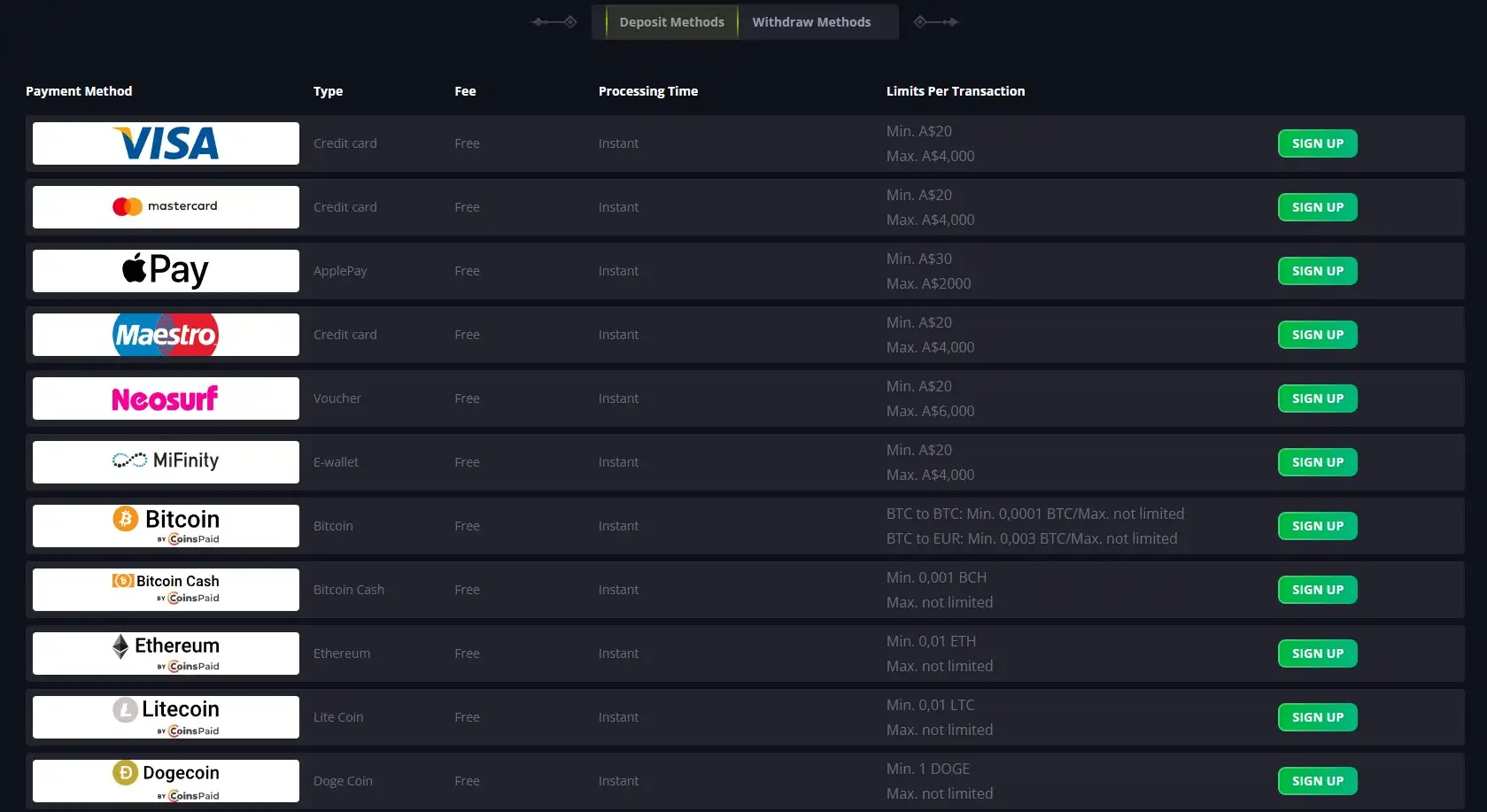
An offshore casino’s stated processing window is not a promise of payment. Offshore operators are prohibited under the Interactive Gambling Act 2001 from providing online casino games to Australian residents, and Australian authorities cannot provide recourse if an operator withholds funds. Do not treat a fast advertised withdrawal or a prominent casino ranking as evidence that your cash-out is protected.
Before You Send SOL to a Casino Wallet
A specialist review reported minimum SOL deposits ranging from 0.01 to 0.1 SOL, equivalent to AUD$2.80–$28 at April 2026 prices. Treat that as a reported range, not a standard: the minimum is set by each platform and may change. A low entry amount does not reduce the risks of sending funds to an offshore casino.
A Solana transfer is irreversible. Check the destination address against the casino’s deposit instructions before confirming, and make sure the wallet is set to the correct network. If you send SOL to the wrong address, the funds may be permanently lost; there is no ordinary payment reversal to request. Do not rely on a saved address without checking it again.

SOL’s price can also move while funds are held on the platform. A balance shown in SOL may be worth less in Australian dollars by the time you withdraw it, even if the SOL amount has not changed. Consider that exposure before transferring funds.
Australian residents should also understand the legal position: the Interactive Gambling Act 2001 prohibits offshore operators from providing online casino games to people in Australia. The fact that players are not directly penalised does not make offshore gambling legally safe. Offshore platforms offer limited consumer protection, and Australian authorities cannot recover funds if an operator withholds them or closes.
Read the cash-out terms before depositing, not after a win. Larger withdrawals or bonus cashouts may trigger KYC checks requiring ID. Using a VPN may breach a platform’s terms and can lead to account seizure and loss of funds. If you cannot accept those outcomes, do not send SOL.
Is it legal to use Solana casinos in Australia?
Australians can legally buy, hold and transfer SOL, but overseas operators are prohibited from offering online casino services to Australian residents under the Interactive Gambling Act 2001. The Act targets operators rather than players, but you have no Australian legal protection if an offshore casino freezes your account or withholds winnings.
What is the minimum deposit for a Solana casino?
Minimum deposits typically range from 0.01 to 0.1 SOL, approximately AUD 2.80–28 at April 2026 prices.
Can I deposit other cryptocurrencies at a Solana casino?
Some Solana casinos accept USDC on Solana as well as SOL. Check the casino’s cashier for the supported asset and network before sending funds.
Are Solana casino bonuses worth claiming?
They can be, but check the wagering requirement, eligible games, time limit and maximum cashout before accepting. Bonus winnings must be wagered before withdrawal, and games such as blackjack or roulette may count less toward the requirement than slots.
Can I use Australian dollars directly?
Generally, no. You’ll usually need to buy SOL using AUD through an Australian exchange or on-ramp, then transfer it to the casino’s Solana deposit address.
Written by the editors at Lucky elf Casino.