
Best Paying Online Pokies in Australia: What to Know
 Available in AU
A stated return-to-player figure is not a session forecast, while bonuses, verification and Bitcoin transfers can affect balances and withdrawals.

Table of Contents
- What “Paying” Can—and Cannot—Tell You About a Pokie
- Bitcoin Pokies as Payment-Enabled Digital Games
- How Game Credits and Play Modes Work
- Assessing Pokie Information Without Assuming a Payout
- Bonus Terms That Can Change a Pokie Balance
- Bitcoin Deposits: Addresses, Transfers and Recognition
- Australian Rules and Offshore Real-Money Casino Claims
- Verification Steps That Affect Access to Withdrawals
- Bitcoin Withdrawal Requests and Processing Delays
- When a Bitcoin Payment or Withdrawal Goes Wrong
What “Paying” Can—and Cannot—Tell You About a Pokie
The phrase “best paying” sounds like a comparison of outcomes, but it does not, by itself, tell you what a particular game will return or what an operator will pay a player. It can refer to different things: a game’s stated return-to-player figure, a player’s results over a short session, or an operator’s handling of withdrawals. Those are separate measures. Treating them as interchangeable makes a claim sound more definite than it is.
A game’s return-to-player figure, when one is stated, describes a theoretical relationship between wagers and returns across a very large number of plays. It is not a forecast for an individual session. It cannot tell you whether a particular play will win, how long a balance will last, or what result you will see next. A figure presented without context also leaves questions: which game version does it describe, and does it apply to the game as offered? Without clear answers, the label “high paying” is not enough to establish a meaningful comparison.
When you’re choosing online pokies in Australia, payment details and licensing can help you decide what to check before signing up. Use these operator notes as a starting point, and verify the terms that matter to you.
License: Curacao · Min. deposit: A$20 (POLi) Lucky Dreams lists a minimum deposit of A$20 via POLi. It is licensed in Curacao.
License: Curacao OGL/2024/1335/0780 · Min. deposit: EUR 20 Vegaz Casino lists a minimum deposit of EUR 20 and holds Curacao OGL/2024/1335/0780.
License: Curacao Golden Pokies is listed as licensed in Curacao. That is the available licensing detail to consider when assessing the operator.
License: Curacao eGaming (Roby Games Ltd) Roby Casino is associated with Curacao eGaming and Roby Games Ltd. Its licensing details are the available basis for assessing this operator.
Payout speed: crypto under 1 hour, PayID 1-3 business days · Min. deposit: A$20 (A$30 to qualify for the bonus) Ricky Casino lists crypto payouts in under an hour and PayID payouts in 1–3 business days. The minimum deposit is A$20, or A$30 to qualify for the bonus.
License: Curacao eGaming (Hollycorn N.V., since 2017) · Min. deposit: A$20-30 (depends on the offer) Playfina Casino has been associated with Curacao eGaming through Hollycorn N.V. since 2017. Its minimum deposit is A$20–30, depending on the offer.
License: Curacao Gaming Control Board OGL/2023/176/0095 (Hollycorn N.V.) LuckyVibe holds a Curacao Gaming Control Board licence, OGL/2023/176/0095, under Hollycorn N.V.
License: Curacao (operating since 2017) · Min. deposit: A$20 Uptown Pokies has operated since 2017 and is licensed in Curacao. Its minimum deposit is A$20.
License: Curacao Gaming Control Board JustCasino is licensed by the Curacao Gaming Control Board. That licensing detail is the available point to consider about the operator.
License: Curacao Gaming Control Board OGL/2023/174/0082 (Dama N.V.) SpinsUp holds a Curacao Gaming Control Board licence, OGL/2023/174/0082, under Dama N.V.
Short-term results are different again. A player may receive a return that is much higher or lower than a theoretical figure over a limited run of play. That does not, by itself, show that the game has changed or that its stated return is false. Nor does one player’s account establish how the game will behave for someone else. Individual results are observations, not a reliable basis for ranking games.
The word “paying” can also point to the operator rather than the game. In that context, it may mean that a withdrawal request was approved and funds were sent. That says something about a particular transaction, not about the game’s return. A game can produce a balance that appears withdrawable while the operator’s procedures determine whether and when a request is processed. Conversely, an operator’s payment record cannot prove that a game offers a particular return. These questions need to be kept separate.

A claim about the “best paying online pokies in Australia” therefore needs more than a superlative. It would need to define what is being measured and support the comparison with information that applies to the same games and conditions. A ranking based on player anecdotes, promotional language or a few reported wins does not establish a general result. Even a published game figure would describe a theoretical property of that game, not guarantee an outcome or prove that an operator will pay every requested balance.
The distinction matters because a game return and an operator’s conduct are not the same kind of evidence. A game figure concerns a model of play. A payment claim concerns the operator’s handling of funds and requests. Neither automatically verifies the other. A page that uses “best paying” without saying which meaning it intends may leave readers with an impression of certainty while answering neither question precisely.
The phrase “best paying casino” is similarly incomplete. It could refer to games available, the returns stated for those games, reported player results or an operator’s record of paying withdrawals. A casino-wide claim cannot be inferred from one game, one player’s experience or one completed transaction. The wording may suggest a dependable overall advantage, but the phrase itself supplies no evidence for one.

For Australian readers, there is another limit to keep in view. Offshore operators discussed in this context hold licences primarily from Curacao eGaming or the Anjouan Gaming Authority, but a licence does not establish what a game will return or settle a dispute about a payment. Australian consumer protection laws do not apply to those offshore operators. That means a “best paying” label should not be treated as assurance that an advertised result is predictable or that a player has the protections associated with a local provider.
The practical reading is narrow: “paying” is a claim that needs a defined measure and evidence suited to that measure. It is not a promise about your next session, a verified ranking of games, or proof of an operator’s future actions. If the wording does not distinguish game returns from payment handling, it cannot support a clear conclusion about either.
Bitcoin Pokies as Payment-Enabled Digital Games
A Bitcoin pokie is a digital slot machine that accepts Bitcoin as a form of payment. The term combines two separate ideas: the type of game and a payment option. It does not describe a particular machine, establish how its play works, or tell you what outcome to expect.
The word “pokie” refers to the slot-machine format. “Bitcoin” identifies the payment method the game’s service accepts. It does not mean that the game itself runs on the Bitcoin network. Nor does the label, by itself, say anything about the software behind the game, its rules or the way an operator handles accounts. Those are separate details, not consequences of using Bitcoin.
This distinction matters when you encounter descriptions such as “Bitcoin pokies” or “Bitcoin slot machines”. They are broad category labels, not proof that a particular game is available to you or that a payment will be accepted under every circumstance. A label can tell you what kind of payment option is being described; it cannot establish the legal status of a service or verify its claims.

The category is also narrower than “online gambling with cryptocurrency”. A Bitcoin pokie refers specifically to a digital slot-machine game with Bitcoin accepted as payment. Other online games, or services that mention cryptocurrency without offering a slot-machine format, do not become pokies on that basis. Likewise, a digital pokie that does not accept Bitcoin is not a Bitcoin pokie simply because it is online.
It helps to keep the game and the payment method conceptually separate. The game is the digital slot-machine experience. Bitcoin is the payment form associated with it. Treating these as distinct parts avoids reading extra meaning into the name: it does not certify a game’s quality, establish that its claims are accurate, or tell you whether a particular person can lawfully access the service.
The word “accepts” should also be read narrowly. It identifies a stated payment capability; it is not a promise that every transaction will be credited, that access will be available, or that a service will meet a player’s expectations. The term alone does not explain the operator’s account procedures or settle any question about a payment. Those matters depend on processes beyond the definition of the game category.
For the same reason, “Bitcoin” is not a measure of a pokie’s performance. It describes the payment method, not the likelihood or size of a result. A payment label cannot establish that one game pays more than another, that a game is reliable, or that an advertised description has been independently verified. Those claims need to be considered separately rather than inferred from the presence of Bitcoin.
When reading a description, separate what it identifies from what it leaves unanswered. The phrase can identify a digital slot machine and its stated acceptance of Bitcoin. It does not, on its own, tell you how the game’s play is structured, what conditions apply, or whether the service is suitable or lawful for you. Keeping the definition this precise prevents a payment feature from being mistaken for evidence about the game or the service around it.
- Keep the digital slot-machine experience separate from the payment method
- View “Bitcoin” as a payment form rather than a measure of performance
- Treat the label “accepts” as a stated capability rather than a guarantee
- Assume a “Bitcoin pokie” label certifies a game’s quality
- Infer the legal status of a service from the accepted payment method
- Use the presence of Bitcoin to establish that one game pays more than another
How Game Credits and Play Modes Work
Online pokies can be played in free mode or real-money mode. The screen may look similar in both, but the balance shown does not mean the same thing. In free play, credits are for using the game without staking real money. In real-money play, credits are linked to a monetary stake. A displayed credit count alone does not tell you which mode is active; check the mode and the value assigned to a credit before interpreting the balance.
Credits are tied to the individual game, rather than being a universal unit shared across all pokies. A credit amount in one game cannot be assumed to represent the same Bitcoin value in another. The game’s own credit settings matter, and, where Bitcoin is used as the payment currency, the value also depends on the current BTC price. A specialist review describes this relationship, but it should not be treated as a fixed conversion rule across games or operators.
That distinction matters when reading a balance. A large number of credits can look substantial while representing a small monetary amount, and a smaller count can have a different value in another game. The number displayed is therefore not enough to compare stakes or balances. You need the game’s stated credit value and the applicable Bitcoin conversion to understand what the figure represents.

Free play is useful for observing a game’s controls and how its credit display changes during play. But a free-play balance is not a real-money balance: it does not establish that you have funds at stake or that the displayed credits can be exchanged for Bitcoin. If you switch modes, do not assume that a credit count or its apparent value carries over. Each game and mode needs to be read on its own terms.
In real-money mode, the relevant unit is still the game’s credit, but its relationship to money depends on the assigned stake value. The credit count records activity within that game; it does not, by itself, show the amount of Bitcoin involved. The current BTC price can also alter the Bitcoin equivalent of a monetary value, so a conversion observed at one time should not be assumed to apply later.
Keep three separate ideas in view: the mode you selected, the number of credits shown, and the monetary value assigned to those credits. Confusing them can lead to an inaccurate reading of what is being risked. For instance, seeing credits increase or decrease describes a change in the game display; it does not independently establish a corresponding Bitcoin amount unless the game’s credit value and conversion are known.
A practical way to read a game screen is to identify whether it is free or real-money play first, then locate the credit denomination and any stated Bitcoin equivalent. If that information is absent or unclear, the balance cannot be reliably interpreted as a monetary figure. Do not infer value from the number of credits, the artwork, or the way the balance is formatted.
Reading a Game Screen
- Identify if the game is in free or real-money mode
- Locate the credit denomination
- Find the stated Bitcoin equivalent
- Check the current BTC price for conversion
The same care applies when comparing different games. Their credit units may differ, so comparing displayed totals without checking each game’s settings is not meaningful. Nor does a credit denomination establish how much a game will return. It describes a unit used during play, not a verified measure of likely results. In Australia, this explanation is informational: it is not a recommendation to use an online casino or to stake money.
Assessing Pokie Information Without Assuming a Payout
A claim that a casino has “best paying pokies” combines several different questions: what games it offers, what information exists about those games, and whether the operator will honour a withdrawal. A favourable answer to one does not establish the others. A review, a licence claim or a broad game catalogue cannot, by itself, show that a particular pokie will return a certain amount or that an operator will pay a particular player.
Treat reviews as claims to examine, not as proof of an outcome. A specialist review recommends considering reviews, licensing and the range of pokies available. Those points may help you assess what is being presented, but they do not verify a payout ranking. Check whether a review explains the basis for its conclusions and distinguishes observable details from promotional language. If it calls a game “high paying” without explaining what that means or how the claim was checked, the label is not a measurable result.
Reviews can also describe different things while using similar wording. One may discuss the games on offer; another may report an account holder’s experience; another may repeat the operator’s own statements. Those are not interchangeable forms of evidence. Read the claim itself and ask what it actually supports. A statement about selection says nothing by itself about returns, while a report of one person’s experience cannot establish what another person will receive.

Licensing requires particular care for readers in Australia. An offshore licence is not an Australian authorisation to provide real-money online pokies to people in Australia, and Australian consumer protection laws do not apply to offshore operators. A licence reference should therefore not be treated as proof that an operator is locally regulated or that an Australian player has local consumer protections. The presence of a licence badge or regulator name does not change that distinction.
Game selection is another limited but checkable point. A catalogue can show whether an operator lists a range of pokies, but breadth is not evidence that those games pay more. Nor does the number of titles establish that the information shown about them is complete or independently verified. Keep catalogue claims separate from claims about game performance and payment.
A useful assessment records each claim and its limits. For example, “the review says the catalogue is broad” reports what the review states; it does not convert that statement into proof that the games are better-paying. “The page displays an offshore licence claim” describes what is visible; it does not establish Australian approval or guarantee an outcome. Precise wording prevents a promotional assertion from becoming a conclusion it cannot support.
For that reason, no operator or pokie can be identified here as the best-paying on the basis of these checks. Reviews, licence information and game selection can help you understand what is being claimed, but they are separate from verified evidence of what a game or operator will pay. Treat any ranking that does not explain its evidence as a claim, not a dependable measure of a future result.

Bonus Terms That Can Change a Pokie Balance
A bonus balance is not necessarily treated like cash that you can use without conditions. Its terms can specify which games count towards wagering requirements and how much each eligible bet contributes. That contribution affects how quickly play reduces the remaining requirement; it does not establish what a game will return or whether you will finish with a withdrawable balance.
The distinction between game categories can be substantial. Some terms assign table games a 0% contribution and pokies a 100% contribution. Under those terms, table-game bets do not advance the wagering requirement, while eligible pokie bets count in full. A contribution rate is an accounting rule for the bonus, not a measure of a game’s payout or a prediction of its result.
The rule may also vary within the pokie category. Some high-RTP slots can be subject to a 50% contribution cap, so only part of an eligible bet may count towards the requirement. A player comparing games by their advertised return can therefore miss a separate condition that changes how bonus play is recorded. The return figure and the contribution percentage describe different things: one concerns a game’s stated payout characteristics, while the other determines how play is credited under bonus terms.
Read the contribution table before using a bonus. Check whether it distinguishes pokies from table games, and whether it names a lower contribution for particular games or game types. If the wording is unclear, the practical question is whether a bet counts at all, and, if it does, what share counts. Do not assume that every game contributes equally simply because it appears in the same game catalogue.

Maximum-bet limits are another independent condition. Bonus terms can set a permitted maximum stake while bonus play is active. If a bet exceeds that limit, the operator may void the bonus play. That can affect the bonus balance or the status of play connected with it, even when the game itself has accepted the bet. The balance shown on screen therefore does not, by itself, confirm that the play complied with the terms.
Check the maximum-bet rule alongside the contribution rates, including how the terms define a bet made while bonus play is active. If a rule is ambiguous, do not infer permission from the game interface: a displayed balance and an accepted stake are not proof that the operator will treat the play as eligible. Keep the wording of the applicable terms available so you can compare it with any later explanation of how the bonus was counted or voided.
These conditions can make two balances that look similar behave differently. One may be composed of play that counts fully, while another may include bets that count only in part or not at all. Neither contribution rates nor bonus balances show which pokie is “best paying”; they describe how an operator applies its bonus rules.
Bitcoin Deposits: Addresses, Transfers and Recognition
A Bitcoin deposit involves two separate actions: sending funds from your wallet and the casino operator recognising the incoming payment. Copying the address completes only the first part of the process. A transfer should not be treated as credited merely because you have sent it; the operator must also detect it and associate it with the relevant account.
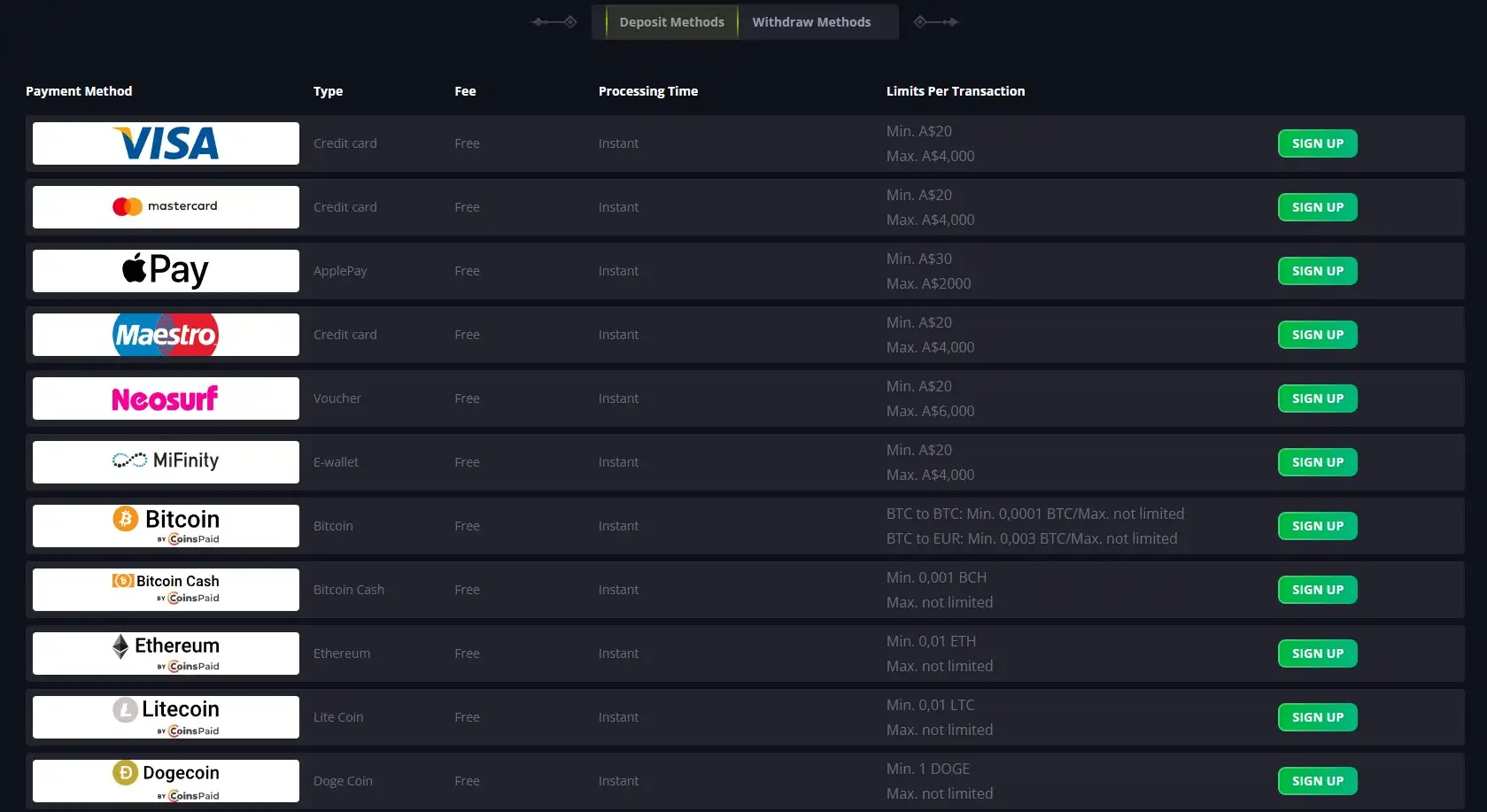
The address used for the transfer is provided by the casino. The basic path is from that account address to the wallet from which you send Bitcoin. Because the address identifies where the funds are directed, a copying error can send them somewhere other than the intended destination. Check that the address entered in your wallet matches the address supplied for the deposit before confirming the transaction. This is a way to reduce entry errors, not a way to reverse a transfer after it has been sent.
Recognition can fail or be delayed even when Bitcoin has been sent. One cause is reusing an address. If an address is used again, the operator may have difficulty identifying which account or deposit an incoming payment relates to. Another cause is underpayment: if the amount received is less than the amount associated with the deposit request, the operator may not credit it as expected. A third possibility is delayed detection on the operator’s side. In that case, the payment may not be promptly reflected in the account even though the sending action has been completed.

These cases have different causes, so they should not be treated as the same problem. With address reuse, the issue is matching the incoming funds to the right account. With underpayment, the amount received does not meet the amount expected for the deposit. With delayed detection, the operator has not yet recognised the payment. The visible result may be similar—a balance that has not changed—but the reason affects what information is relevant when asking the operator to check the deposit.
Keep the deposit details available, including the address used and the amount sent. If the account does not show the payment, compare those details with the deposit information provided by the operator and ask the operator to investigate the specific transfer. Do not assume that a Bitcoin transfer will be credited immediately, or that sending it again will correct a recognition problem. Sending another payment can create a separate transaction without resolving the first one.
Australian Rules and Offshore Real-Money Casino Claims
Australian law draws a clear line between locally licensed gambling and offshore casino claims. A locally licensed online casino cannot offer real-money pokies to people in Australia. The Interactive Gambling Act 2001 treats online slots and other casino-style games offered to customers in the country as prohibited interactive gambling services. A website’s use of terms such as “Australian casino” does not change that legal position.
Legal Warning
Offshore operators are not licensed to provide real-money casino games in Australia, and Australian consumer protection laws do not apply to them.
Some offshore operators claim to accept Australian customers. Their offshore status does not mean they are licensed to provide real-money casino games in Australia. The operators discussed here hold offshore licences, including licences associated with Curacao eGaming or the Anjouan Gaming Authority; those are not Australian authorisations. A foreign licence should not be mistaken for permission to offer these services to people in Australia.
The distinction also matters if a dispute arises. Australian consumer protection laws do not apply to the offshore operators discussed here. That means you should not assume Australian consumer protections will govern a disagreement with one of them. A site’s own terms or statements about its licence do not extend Australian legal protections to an offshore business.
Searches for the best-paying Australian casino or real-money pokies can make a website’s location, licence and advertised payment claims seem interchangeable. They are not. A claim about potential returns does not establish that an operator is authorised in Australia, nor does an offshore licence establish that Australian consumer protections apply. These are separate questions, and neither a promotional label nor a payment method changes the legal status of the service.
Real-money gambling is for people aged 18 or older. Meeting that age requirement does not make an offshore casino service locally authorised or bring it within Australian consumer protection law. If you are considering information about such a service, keep those distinctions in view rather than treating an “Australian” label as proof of domestic licensing or protection.

This page is informational. It does not recommend or advertise online casino services, and it does not endorse any operator or claim about returns. Its purpose is to explain the Australian legal context so that descriptions of offshore real-money casinos are not confused with locally authorised services.
Verification Steps That Affect Access to Withdrawals
Verification can affect whether an offshore operator approves a withdrawal, even when the account balance is visible. An operator may ask for further checks when you make your first withdrawal or once your cumulative deposits reach a threshold in the AUD 2,000–5,000 range. The trigger varies by operator, so having deposited before without being asked for documents does not establish that no further checks will apply.
The process can involve separate stages. Registration checks establish basic account details. Identity and address documents may be requested later, including at a withdrawal or deposit threshold. A further check may seek to establish that you control the cryptocurrency wallet used to send funds. These steps concern account access and payment ownership; completing them does not establish that a withdrawal will be approved.
For a Bitcoin account, wallet evidence can be specific to the sending address. A specialist review describes possible requests to sign a message using the deposit address or to provide a wallet screenshot showing the transaction that sent the Bitcoin. Whether such evidence is requested, and what form is accepted, depends on the operator. Keep access to the wallet and transaction records used for any transfer, and check the operator’s instructions before submitting sensitive material.
Wallet Verification
Complete registration checks to establish basic account information.
Provide identity and address documents when requested at a withdrawal or deposit threshold.
Sign a message using the deposit address or provide a wallet screenshot showing the Bitcoin transaction.
A specialist review also recommends completing the later identity and wallet checks before requesting a first withdrawal, ideally within 24 hours of registration. Treat that as guidance from the review, not as a deadline or a promise that verification will prevent delay. Starting early can reduce the chance that an approval queue is held up while documents or wallet evidence are still outstanding. If a request is unclear, ask the operator to specify which document or proof is missing and how it must be submitted.
Do not assume that passing verification guarantees payment: checks address identity and account control, not every reason an operator may delay or refuse a request. Real-money gambling is for people aged 18 or older. Australian consumer protection laws do not apply to offshore operators, and this informational page does not recommend or advertise online casino services.
Bitcoin Withdrawal Requests and Processing Delays
A Bitcoin withdrawal starts with the destination address. You copy your wallet address and paste it into the casino’s withdrawal form. The address determines where the transaction is sent, so check it carefully before submitting: blockchain transfers sent to the wrong address are generally irreversible.
After you request a withdrawal, two separate processes affect the wait. First, the operator must approve and release the request. An approval queue, unfinished identity checks or processing batches limited to business hours can hold it before any Bitcoin transfer begins. These are operator-side delays; the blockchain cannot speed them up.
Once released, the transaction must be broadcast to the Bitcoin network and processed there. Network conditions affect transfer timing, while the miner’s fee is separate from the operator’s approval process. The fee varies over time; a specialist review describes it as typically very small, but that characterisation is not a fixed rate.

A specialist review reports that most Bitcoin withdrawal transactions are completed within an hour. Treat this as a reported timeframe, not a promise: it does not establish how long an operator takes to approve a request, and network conditions can change. If a request remains pending, check whether the operator is still reviewing it or has released the transaction. A transaction identifier can help distinguish an operator-side wait from a transfer already submitted to the network.
Before confirming, make sure the withdrawal form contains the intended wallet address. If the operator asks for further checks, the request may remain in its approval process until those are resolved. No stated processing estimate can guarantee when funds will arrive: the operator’s queue and the blockchain are different parts of the route, each with its own timing.
When a Bitcoin Payment or Withdrawal Goes Wrong
A cryptocurrency transfer sent to the wrong address is generally unrecoverable. Blockchain transactions are irreversible, so a typo or copied address error can send Bitcoin or Ethereum beyond your control. Check the destination details before confirming a transfer; do not assume an operator can reverse it.

A withdrawal can also be delayed by a security review. Some offshore operators may scrutinise significant wins, particularly when an account is new or the request is a first large withdrawal. A review can be legitimate, but it can also be used as a stalling tactic. Keep records of messages and transaction details, and do not treat a claim about the best-paying real-money casino as evidence that a withdrawal will be approved.
If a withdrawal is described as stuck, do not deposit more money to unlock it. A demand for an additional payment as a condition of releasing funds is a serious warning sign, not a reason to send more cryptocurrency.
This is affiliate material and may include sponsored links. That disclosure does not make an offshore casino safe or change the risks involved. Australian consumer protection laws do not apply to the offshore operators discussed here. Real-money gambling is for people aged 18 or older; this page does not recommend or advertise online casino services to Australians.
Can Australians use Bitcoin at online casinos for entertainment?
Yes, Bitcoin can be used as a payment method at online pokies, and free play is also available. Australian law prohibits locally licensed online casinos from offering real-money pokies to residents, and Australian consumer protection laws do not apply to the offshore operators discussed.
Is verification required?
Yes, verification may be required, including at a first withdrawal or after cumulative deposits of AUD 2,000–5,000, depending on the operator. Crypto checks may involve signing a message from your deposit address or showing a wallet screenshot of the transaction.
What does it cost to start?
You can start with free play, or choose real-money play. For real-money play, you need Bitcoin; transfers also incur miner’s fees, which are usually very small but vary over time.
Are Bitcoin casinos legit?
The offshore operators discussed hold licences primarily from Curacao eGaming or the Anjouan Gaming Authority. A licence does not guarantee game returns or settle payment disputes, and Australian consumer protection laws do not apply to these operators.
Created by the ”Lucky elf Casino” editorial team.