
Instant Bank Transfer Casinos in Australia
 Available in AU
PayID and conventional wires use bank accounts but follow different instructions, processing stages and routes to casino balances.

Table of Contents
- How Bank Transfers Work for Online Pokies
- Making a PayID Casino Deposit
- What to Check Before Choosing a Bank Transfer Casino
- What “Instant Bank Transfer” Means in Australia
- Bank Transfer Casino Withdrawals: Details and Timing
- What Determines How Fast a Bank Transfer Pays Out
- Depositing by Bank Transfer and Checking Bonus Terms
- Direct Bank Wires for Real-Money Casino Payments
- How to Assess a Top Bank Transfer Casino
- PayID vs Bank Wire: Which Transfer Route Fits?
How Bank Transfers Work for Online Pokies
“Bank transfer” can describe more than one payment route. It may mean a payment initiated through your bank using a service such as PayID, or a conventional wire sent to a casino’s bank account. These routes use a bank account as the source of funds, but the payment instructions, processing stages and possible delays differ. A casino’s payment menu may use the same broad label for methods that are not technically identical, so the label alone does not explain how a transaction moves.
For a bank-based payment, the bank authorises the movement of money from your account, while the receiving service or operator records the incoming funds against an account. Those are separate functions. A transfer can reach its destination without being immediately reflected in a casino balance, because the operator may still need to identify and process it. The payment rail, the bank and the operator each have a distinct role; treating them as one system makes timing and payment status harder to understand.
PayID is a service offered through Australia’s New Payments Platform. It lets users send or receive a payment using an identifier, such as a mobile number or email address, rather than entering conventional account details. It is therefore bank-based, but it is not the same as arranging a traditional wire to a business bank account. The term “online bank transfer casino” can refer loosely to either route, even though they work differently.
A conventional wire involves sending funds to a specified bank account. The sender’s bank processes the instruction and the recipient’s bank receives it; the operator then has to associate the payment with the relevant account. International routing or currency conversion can add further considerations. Those features make a wire different from a bank-linked service that uses an identifier. The detailed requirements for wires are separate from the general role bank payments play in this context.
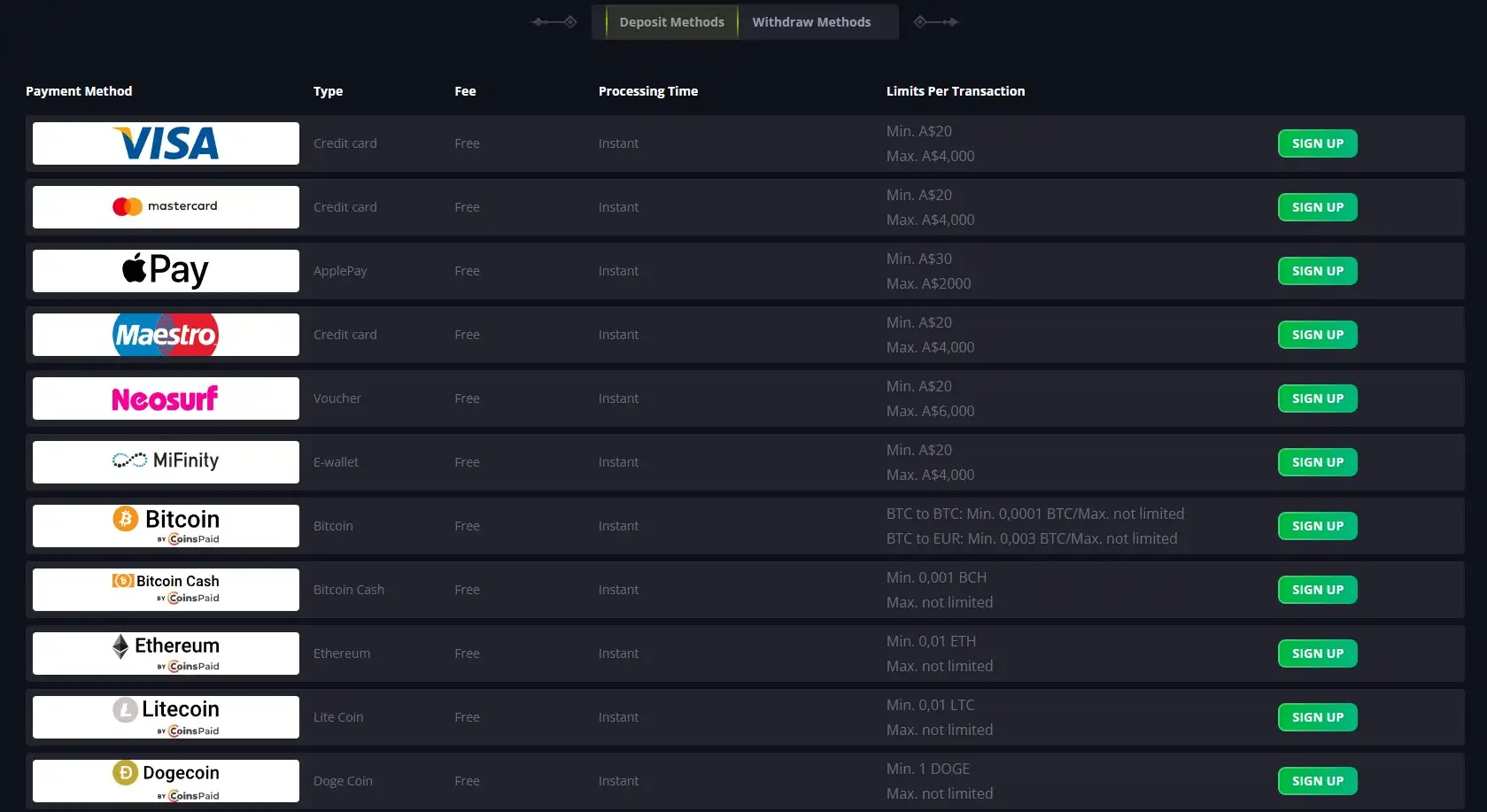

Other payment methods have different endpoints. With a card payment, you authorise a charge through the card network and issuer rather than sending a bank transfer to a recipient’s account. Visa and Mastercard are widely accepted for deposits, but a card payment does not guarantee that a later withdrawal can return through the same route. A specialist review reports that card withdrawals may be slower or unavailable depending on the processor. The deposit and withdrawal paths can therefore be asymmetric even when the same card is used initially.
POLi is another bank-linked deposit option, but it should not be treated as a general-purpose way to receive money. It is mainly used for deposits, so its availability does not establish that withdrawals can be paid through POLi. This illustrates why a list of payment logos is not enough to determine how money can move in both directions: a method may support one side of an account’s payment activity but not the other.

E-wallets provide a further point of comparison. They hold or route funds through a separate payment account, rather than sending each payment directly from a bank account to the operator. The relevant distinction is not simply “bank” versus “not bank”; it is where the funds are held, which parties process the transaction, and whether the method supports deposits, withdrawals or both. A casino’s stated options can consequently differ by transaction type.
These distinctions matter when people refer to online pokies bank transfers as if they were one standard product. The phrase may cover a bank-account payment service, a direct wire, or an operator’s broader bank-payment category. It does not, by itself, specify the transfer network, how the operator identifies a payment, or whether the method is available for payouts. Those details belong to the particular payment route and operator terms rather than to the words “bank transfer.”
There is also an important legal context in Australia. The Interactive Gambling Act 2001 prohibits operators from providing real-money online casino games, including pokies, to people located in Australia. A payment method’s technical availability does not make an online casino service lawful to provide in this country.


In practical terms, bank-based payments are best understood as one category within a wider payment system, not as a guarantee of a particular speed, withdrawal route or account-crediting result. PayID, wires, cards, POLi and e-wallets involve different processes. Knowing which process a label refers to is necessary to interpret a payment option accurately, while the casino’s own handling remains separate from the bank’s movement of funds.
Making a PayID Casino Deposit
For people physically in Australia, real-money online casino games, including pokies, are prohibited services under the Interactive Gambling Act 2001. The law applies to operators providing these games to customers in Australia. This section explains how a PayID payment request is structured so you can recognise what it involves; it is not an invitation to fund an offshore casino account.
A PayID request may appear to be a simple bank transfer, but the payment has two separate parts: the casino’s instructions and your bank’s approval. A deposit flow may ask you to select PayID, enter an amount and then confirm the transfer through your banking app. The app is where you review the recipient and authorise the payment. Do not treat a displayed payment screen as proof that the service is lawful or that a deposit will be credited.
What the payment flow asks you to do
In a typical PayID payment sequence, you begin on the payment page and choose PayID as the deposit method. The page may show a recipient identifier and the information needed to match the payment to an account. You then enter an amount and open your banking app to make the transfer. Before authorising any payment, check the recipient name shown by your bank against the details you were given. If the name does not match, do not confirm the transfer.

The amount field does not determine whether the payment will go through. PayID limits are set by your bank, so a transfer can be declined if it exceeds your account’s applicable limit. Casino deposit pages may also state their own minimums. Published PayID deposit minimums commonly fall between AUD 10 and AUD 20, while some bank-transfer deposit pages accept AUD 5. These figures describe offers that may be displayed; they do not establish that a particular service is available or lawful for Australian residents.
The banking app asks you to confirm the payment. Check the amount, recipient and payment description before approval. A transfer that you confirm is a real bank payment, not a temporary authorisation that you can assume will be reversed if the casino account does not update.
Why the reference matters
The payment reference helps the operator associate a bank transfer with the account that requested it. A casino may ask you to enter your player ID or username in that field. If you omit it, mistype it or use a different reference, the payment may not be matched automatically. It can remain pending while staff try to identify it, which may require manual support processing.
Treat the reference as part of the payment instruction, not an optional note. Copy the requested player ID or username accurately, and check it again in the bank app before confirming. Do not add unrelated wording if the payment page specifies a particular reference. A correctly entered reference can help with matching, but it does not guarantee that a deposit will be credited: the recipient’s processing and account rules still apply.
If a transfer has already been sent and the account balance has not changed, avoid sending another payment simply to make the balance update. Keep the bank confirmation and contact the payment recipient through its stated support channel to ask how the transfer will be handled. Do not share banking passwords, one-time codes or full card security details with anyone claiming to resolve a pending payment.
- Check the recipient name in your banking app against the provided details
- Copy the requested player ID or username accurately into the reference field
- Keep the transaction record for your payment
- Confirm the transfer if the recipient name does not match
- Add unrelated wording to the payment reference
- Send another payment if the balance has not updated immediately
A payment screen is not a safety check
The apparent simplicity of PayID can make a deposit request seem routine: select the method, enter the amount, provide the reference and approve it in your bank app. Each step only describes how money may be sent. It does not establish that the receiving service is authorised to provide real-money casino games to people in Australia, or that the payment will be recoverable if a dispute arises.
If you encounter a page requesting a PayID payment for online pokies, do not use the flow to fund play. A valid-looking recipient name or a successful bank confirmation does not change the legal status of the service. Keep the distinction clear: your bank processes the transfer, while the recipient is responsible for matching it to an account. A missing or incorrect reference can interrupt that matching, and confirming the transfer can move money out of your bank account even if no casino balance appears.
What to Check Before Choosing a Bank Transfer Casino
For people in Australia, the first check is whether the service may legally offer the games at all. Under the Interactive Gambling Act 2001, providing real-money online casino games, including pokies, to people physically located in Australia is illegal for operators. A foreign licence does not change that restriction or make an online casino lawful to offer here. This section is therefore not a recommendation to use an offshore casino or send it money.

A payment option alone says little about an operator’s status or reliability. A site may describe PayID or bank transfer as available, but that does not establish that its games may be offered in Australia, that deposits will be credited correctly, or that withdrawals will be paid as expected. Treat payment claims as something to verify, not as evidence that the service is safe or lawful.
Check the recipient before any transfer
If you encounter a PayID payment request, compare the recipient name shown in your banking app with the name the payment instructions say to expect. Do not confirm a transfer if the names differ or the recipient is unclear. A mismatch can mean the payment is going to a different person or business than the one described; it is not a detail to overlook because a page uses familiar branding.
Read the payment instructions for any required player ID or username and reference. If a reference is missing or incorrect, the operator may not automatically match the payment to an account. The funds can remain pending while support staff try to identify them. Check the reference carefully before confirming, and keep the transaction record. These checks reduce the risk of a misdirected or unrecognised payment, but they do not make an unlawful service lawful.
Examine licence claims and payout evidence
Look for the named regulator, the licence holder and the jurisdiction in the site’s terms, rather than relying on a badge or a general claim that the casino is “licensed.” In Australia, a foreign licence is not a local authorisation to provide real-money casino games to people here. Do not treat a licence badge as a reason to proceed.
Attention: A foreign licence is not a local authorisation to provide real-money casino games to people in Australia, and a licence badge should not be treated as a reason to proceed.
A payout record also needs context. Look for clear terms explaining how withdrawals are handled, what checks can be requested and whether the operator may require a return through the deposit method where possible. That last condition has been reported in a specialist review, but payment rules differ between operators; it should not be assumed to apply universally. Testimonials or promotional statements are not proof that a particular payment will be approved or arrive on time.
KYC verification can also affect access to funds. A specialist review reports that identity checks are generally requested before a first withdrawal and that completing them beforehand can reduce paperwork delays. Check what documents the service requests and how it handles personal information. Do not send identity documents through an unverified contact channel.
Check the withdrawal route before depositing
Confirm which withdrawal methods are actually available, rather than assuming that a deposit method can also be used to receive money. Some operators may require a withdrawal to go back through the deposit method when that is possible, according to a specialist review; the operator’s own terms should state its policy. If those terms are unclear, inconsistent or difficult to find, that uncertainty is itself a reason not to proceed.
The practical check is not simply whether a site accepts bank payments. It is whether its identity, payment instructions, terms and payout claims can be independently understood—and, in Australia, whether the service may legally offer the games to you. A smooth-looking payment page cannot resolve that legal issue.
What “Instant Bank Transfer” Means in Australia
If you’re looking for an instant bank transfer casino in Australia in 2026, check the payment details and minimum deposits before choosing. This list gives you a concise reference to the available facts for each operator.
License: Curacao · Min. deposit: A$20 (POLi) You can make a minimum deposit of A$20 using POLi. Lucky Dreams lists a Curacao license.
License: Curacao OGL/2024/1335/0780 · Min. deposit: EUR 20 Vegaz Casino lists Curacao license OGL/2024/1335/0780 and a minimum deposit of EUR 20.
License: Curacao Golden Pokies lists a Curacao license. That is the available licensing detail to consider when reviewing this operator.
License: Curacao eGaming (Roby Games Ltd) Roby Casino lists a Curacao eGaming license under Roby Games Ltd. You can use that licensing information as a point of reference.
Payout speed: crypto under 1 hour, PayID 1-3 business days · Min. deposit: A$20 (A$30 to qualify for the bonus) Ricky Casino lists crypto payouts in under an hour and PayID payouts in 1–3 business days. The minimum deposit is A$20, or A$30 to qualify for the bonus.
License: Curacao eGaming (Hollycorn N.V., since 2017) · Min. deposit: A$20-30 (depends on the offer) Playfina Casino lists a Curacao eGaming license held by Hollycorn N.V. since 2017. Its minimum deposit is A$20–30, depending on the offer.
License: Curacao Gaming Control Board OGL/2023/176/0095 (Hollycorn N.V.) LuckyVibe lists a Curacao Gaming Control Board license, OGL/2023/176/0095, under Hollycorn N.V. You can check this licensing detail when assessing the operator.
License: Curacao (operating since 2017) · Min. deposit: A$20 Uptown Pokies lists a Curacao license and has operated since 2017. Its minimum deposit is A$20.
License: Curacao Gaming Control Board JustCasino lists a Curacao Gaming Control Board license. This is the available detail to use as a reference when considering the operator.
License: Curacao Gaming Control Board OGL/2023/174/0082 (Dama N.V.) SpinsUp lists Curacao Gaming Control Board license OGL/2023/174/0082 under Dama N.V. You can refer to that licensing information when reviewing the operator.
“Instant” describes the payment network’s settlement, not necessarily the moment a casino account displays a deposit. PayID sends a payment through Australia’s New Payments Platform (NPP), which supports real-time transfers between participating bank accounts. The payer uses an identifier, such as a mobile number or email address, rather than entering a conventional account number for every payment.
That distinction matters when you see a claim about an instant bank transfer casino. A transfer can settle through the NPP in real time, but the receiving service has its own process for recognising and crediting it. Network settlement and account crediting are separate events: the first concerns the movement of money between banks; the second depends on the recipient’s systems and handling.
PayID is a service built on the NPP, not a casino-specific payment rail. A person with an Australian bank account can use a PayID identifier to send or receive money where their bank supports the service. The identifier connects to the recipient’s account; it does not itself confirm what the payment is for or how quickly a separate platform will update its records.
This is why “instant” should be read narrowly. It can describe how quickly the banking network settles a transfer after it has been released. It does not, by itself, establish that a casino has received, matched, reviewed or credited the payment. A recipient may need to associate the incoming transaction with a particular account before its balance changes. The payment network cannot complete that internal step on the recipient’s behalf.

For a bank transfer casino search in Australia, also distinguish the payment method from the legal status of the service accepting it. PayID is a general bank payment service; its availability does not make every business or transaction using it lawful. Under the Interactive Gambling Act 2001, operators may not provide real-money online casino games, including pokies, to people located in Australia. The restrictions apply to the service offered, not to the technology that moves a bank payment.
The word “instant” can therefore describe a real property of PayID without being a guarantee about the full transaction. If the network settles quickly but the recipient has not matched the payment to an account, the funds may have moved while the displayed balance has not changed. Conversely, a delayed account update does not necessarily mean the bank transfer itself is still travelling through the payment network.
When evaluating wording such as “instant bank transfer,” identify which event the claim refers to: bank settlement or the recipient’s account update. Those are different stages, handled by different systems, and the word alone does not tell you that both happen at once. PayID’s real-time capability explains the banking side of the claim; it cannot establish the timing or legal permissibility of a casino’s separate service.
Bank Transfer Casino Withdrawals: Details and Timing
A bank transfer payout has two separate parts: the operator reviews and approves the withdrawal, then the payment is sent to your bank account. The arrival estimate applies after approval, not from the moment you submit a request. A specialist review puts bank-transfer and card withdrawals at one to five business days after approval. That is a reported timeframe, not a guaranteed delivery window.

To request a payout, you may need to enter the bank details required by the payment form. The account information must be accurate so the transfer can be directed correctly. You may also need to provide documents for KYC verification. The operator uses these to check your identity before releasing funds; the information requested and the review process depend on its procedures.
A specialist review reports that identity checks are generally required before a first withdrawal. Completing KYC verification before requesting a payout can reduce the chance that the request is held while documents are collected or reviewed. Follow the operator’s instructions for submitting documents, and check that the details on your account match the information you provide for the bank transfer.
What the timing applies to
The one-to-five-business-day estimate concerns the bank transfer after the operator has approved it. It does not mean every request will be reviewed or paid within that period. If approval has not occurred, the transfer stage has not started. Keep the request confirmation and any payment reference so you can identify the transaction if you need to contact the operator or your bank.
Other payout routes have different reported arrival times. A specialist review says PayID and some e-wallet or cryptocurrency withdrawals may arrive within minutes to hours after approval, while bank transfers and card withdrawals may take one to five business days. These are distinct payment methods; a fast PayID transfer does not make a bank transfer instant.
Before entering bank details, consider the legal context. Under Australia’s Interactive Gambling Act 2001, providing real-money online casino games to people in Australia is illegal for operators. This includes pokies and other casino-style games.
Bank-transfer and card withdrawals are reported to take one to five business days after approval, whereas PayID and some e-wallet or cryptocurrency withdrawals may arrive within minutes to hours.
If a withdrawal is pending, separate the status of the operator’s review from the status of the bank payment. A request awaiting approval is different from an approved transfer that has not yet appeared in your account. Use the operator’s stated process to ask about a pending request, and contact your bank about an approved transfer that has not arrived within the timeframe given. Do not submit another withdrawal request unless the operator confirms that the first one was cancelled; duplicate requests can make it harder to track which payment is being handled.
What Determines How Fast a Bank Transfer Pays Out
A payout has two separate clocks: the time an operator takes to review and release a withdrawal, and the time the payment network takes to deliver it. With PayID, the network can settle a released transfer in real time through the New Payments Platform. That does not mean the money moves as soon as you submit a withdrawal request.

A specialist review identifies the casino’s internal processing as the key bottleneck for PayID withdrawals. The operator may need to check the request before sending it, so a transfer can remain pending even when the payment rail is capable of settling it quickly. The status shown in your account therefore matters: “requested” or “under review” describes an operator-side stage, while a released or processed status indicates that the transfer has been sent.
Specialist reviews report that top-rated PayID casinos may accept withdrawal requests within 0–6 hours of submission. For verified accounts, those reviews put the review and approval window at 2–6 hours. These are reported windows, not a guarantee for every operator or withdrawal. They describe different parts of the process, so do not assume that the first window is added to the second as a fixed total. The actual timing depends on when the request is handled and whether the account is ready for review.

Verification can affect that readiness. KYC checks may require documents before a first withdrawal can be approved; completing them in advance can reduce the chance that a request pauses while information is collected. If the operator needs clarification or additional documents, the review stage can take longer than the payment transfer itself. A fast network cannot resolve a hold that has not yet been cleared by the operator.
The distinction also helps you interpret a delay. If the withdrawal is still marked as pending or under review, the relevant step is likely the operator’s processing, not PayID settlement. If it has been released but has not appeared in your bank account, the transfer is at the payment stage. For a conventional bank transfer, arrival can take longer after approval; a specialist review gives a range of one to five business days for bank transfers and card withdrawals. That timing should not be confused with the operator’s review window.
There is also a legal boundary for Australian readers: the Interactive Gambling Act 2001 prohibits operators from providing real-money online casino games, including pokies, to people physically in Australia. The timing figures above describe reported payment stages, not an endorsement or recommendation to use such a service.
Depositing by Bank Transfer and Checking Bonus Terms
A bonus can change what a bank-transfer deposit is worth and what you must do before withdrawing funds. The offer’s conditions matter as much as its headline: a credit described as a “no-deposit bonus” may have separate eligibility and withdrawal rules, while a deposit offer may require a qualifying payment before the bonus is added.
Legal Prohibition
The Interactive Gambling Act 2001 prohibits operators from providing real-money online casino games, including pokies, to people physically located in Australia.
There is an important legal limit in Australia. The Interactive Gambling Act 2001 prohibits operators from providing real-money online casino games, including pokies, to people physically located in Australia. An offer labelled as a bank-transfer bonus, an instant-transfer promotion or a no-deposit bonus does not change that status. Do not treat an offshore casino promotion as evidence that the service is lawful to provide in Australia.
If you are reading bonus terms to understand how such offers work, check the conditions before accepting anything. Wagering requirements specify how much play is required before bonus-related funds or winnings can be withdrawn. The maximum bet rule limits the stake allowed while a bonus is active; exceeding it may affect eligibility under the offer’s terms. Game weighting explains how different games contribute towards wagering, so a game that appears eligible may count differently from another.
Also check the time limit. It determines how long you have to meet the offer conditions, and an unmet requirement may leave bonus funds unusable or cause them to expire under the stated rules. Maximum cash-out conditions set a ceiling on the amount that can be withdrawn from bonus play. Read whether that cap applies to bonus funds, winnings generated from them, or both.
For a deposit offer, confirm which payment types qualify and whether the payment must be made before opting in. PayID deposits commonly begin at AUD 10–20, while some bank-transfer options accept AUD 5. These figures describe deposit thresholds, not bonus eligibility: the promotion’s own terms determine whether a payment amount qualifies. Do not assume that a bank-transfer deposit automatically triggers an offer.
If a payment reference is required, enter the specified player ID or username accurately. A missing or incorrect reference can prevent the deposit from being matched automatically, which may leave it pending for manual handling. The payment confirmation alone does not establish that a bonus has been applied; check the account terms or offer status before relying on it.

Treat unclear wording as a reason to pause rather than guess. In particular, confirm how the offer defines eligible games, permitted stakes, completion of wagering and the final cash-out amount. These conditions determine what the promotion actually allows, regardless of how prominently its headline is displayed.
Direct Bank Wires for Real-Money Casino Payments
A conventional bank wire is a transfer from one bank account to another using account and institution details. It is different from PayID: a wire is arranged through your bank and may require more recipient information. In Australia, however, operators cannot lawfully provide real-money online casino games to people physically located in the country. This explanation is not a recommendation to fund such a service.
The details a wire may require include the recipient business name, its bank account number and the bank’s name. For an international transfer, the instructions may also request a SWIFT or BIC code, or an IBAN. Entering the recipient information is separate from choosing how to submit the payment: banks may let customers arrange a wire in person at a branch, by phone, or online from a computer or mobile device.
A wire is not necessarily credited as soon as you submit it. A deposit sent this way may take as long as seven business days to appear in an account. That interval concerns the deposit’s arrival; it does not mean a payment to an unlawful online casino service is permitted. Do not treat a payment instruction or a successful bank transfer as evidence that an operator may legally serve Australian customers.

Charges are another consideration. Bank wire fees may be higher than charges for other non-banking transactions, and an international transfer can involve currency conversion. If the sending account and receiving account use different currencies, the conversion can affect the amount received. The applicable rate and fees depend on the banks and the transfer arrangement, so check your bank’s terms before authorising any lawful wire.
Do not send money to recipient details supplied for an Australian-facing real-money casino. If you are assessing a bank transfer for a lawful purpose, verify the recipient independently and review the transfer details with your bank before confirming it.
How to Assess a Top Bank Transfer Casino
A payment setup is only one part of assessing an online casino. In Australia, real-money online casino games are prohibited services under the Interactive Gambling Act 2001, and offshore casino services are actively blocked. A payment feature does not change that legal position.

If you are assessing a casino’s PayID claims, start with the transfer details rather than labels such as “top” or “instant”. PayID limits are set by your bank, and they differ between banks. Check your own available limit before relying on a stated deposit option; a casino cannot raise the limit imposed by your bank.
Next, examine how the payment is matched to an account. The operator may require your player ID or username in the payment reference so its system can credit the deposit automatically. If the reference is absent or incorrect, the payment may remain pending until support staff identify it manually. Confirm the required wording and double-check the reference before any transfer. Also verify that the PayID recipient name matches the details presented by the operator before confirming a payment.
Treat payout claims as a separate point to verify. Review the casino’s payout record and the conditions attached to withdrawals, rather than assuming that a smooth deposit process means a smooth payout. Check whether the operator requires the same payment route for withdrawals where possible, and whether its instructions explain what happens if a payment cannot be matched.

These checks help distinguish a clearly described payment process from one that leaves key steps uncertain. They do not establish that an online casino is lawful to use in Australia, nor do they make a payment route safe or suitable.
PayID vs Bank Wire: Which Transfer Route Fits?
“Bank transfer” can describe two different payment routes. PayID sends a payment through your banking app using an identifier, while a bank wire is a conventional transfer to a bank account. The distinction matters because the routes have different settlement times and handling requirements.
A PayID payment can reach a casino within seconds; the stated arrival window is typically 3–15 seconds. That describes the payment reaching the recipient, not any separate processing the recipient may apply. A bank wire can take as long as seven business days to appear in a casino account, so it is not equivalent to a near-real-time PayID transfer.

Cost is another consideration. A bank wire may involve charges that are higher than those for non-banking payment methods. The actual cost depends on the transfer and the banks involved, so check the displayed fees before sending money. Do not assume that the word “transfer” means the same speed or cost across both options.
The useful comparison is therefore the payment rail, not a general claim that one route is always better. PayID is the faster-settling route when the recipient supports it; a wire may suit a transfer that can tolerate a longer arrival window and possible charges.
In Australia, it is also important to distinguish payment capability from legality: the Interactive Gambling Act 2001 prohibits operators from providing real-money online casino games to people physically located in the country. A payment method’s availability does not make such a service lawful.
Do Australian online casinos support PayID withdrawals?
Some casinos offer PayID withdrawals. After the casino approves a request, the payment may arrive within minutes to hours; internal review is often the main delay.
What are the minimum and maximum deposit limits at PayID casinos?
Deposits commonly start at AUD 10–20, and some services accept as little as AUD 5. Your bank sets PayID transaction limits; most major Australian banks allow AUD 1,000–5,000 per transaction, with daily limits of AUD 10,000–20,000.
What is the minimum PayID deposit?
PayID casino deposits commonly start at AUD 10–20, although some accept deposits as low as AUD 5.
How long do PayID deposits take?
PayID deposits typically reach casinos within 3–15 seconds. The casino may take longer to credit the payment if it needs to match your payment reference to your account.
Published by the Lucky elf Casino team.